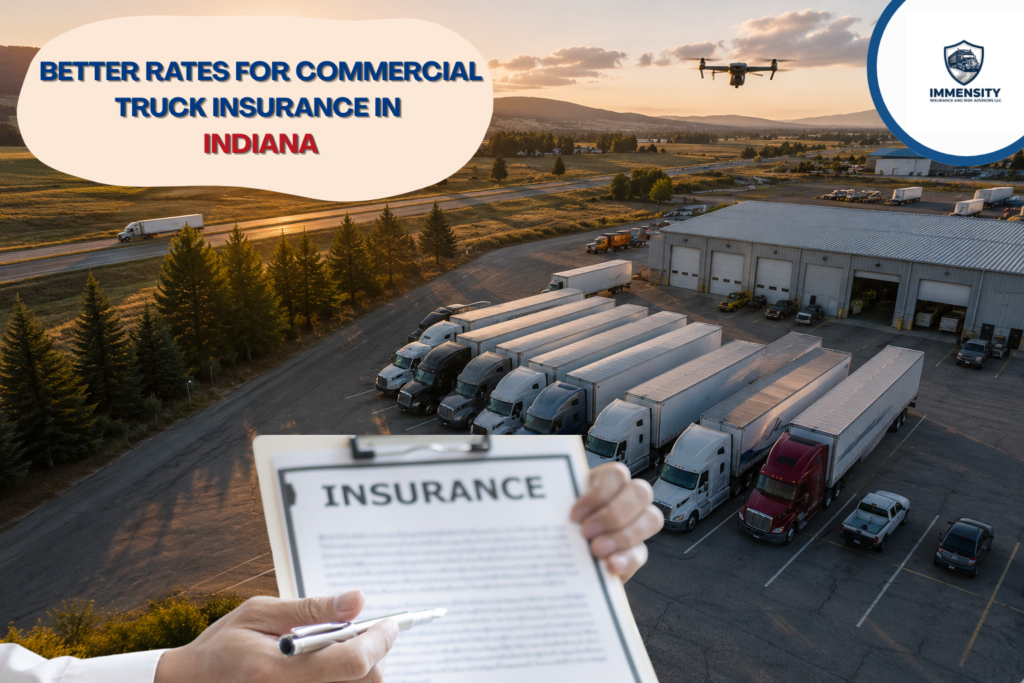
Finding better rates for Commercial Truck Insurance Indiana starts with understanding what insurers evaluate and how your trucking operation manages risk. Premiums can vary widely because carriers review driving history, vehicle type, cargo, operating radius, claims, coverage limits, and safety practices. Therefore, the cheapest policy is not always the best value. A strong insurance strategy balances cost with protection that fits your routes, trucks, trailers, and contracts. Whether you run one truck or manage a growing fleet, comparing coverage carefully can reveal meaningful savings while helping you avoid expensive gaps that could disrupt your business after an accident, cargo claim, theft, or other unexpected loss.
Why Commercial Truck Insurance Indiana Rates Can Differ
No two trucking businesses operate exactly the same way. Consequently, insurers do not calculate every commercial trucking premium using one standard price. Commercial Truck Insurance Indiana rates depend on several factors connected to the truck, driver, business operation, cargo, routes, and previous losses.
For example, a long-haul tractor-trailer operation may face different risks than a local delivery company that travels within a smaller radius. Likewise, a company hauling general merchandise may have different insurance needs from a carrier transporting refrigerated products, construction materials, or high-value cargo.
Driver history also plays an important role. Insurers generally look at accidents, violations, experience, licensing records, and other risk indicators when evaluating a trucking business. Therefore, companies that maintain experienced drivers and consistent safety practices may place themselves in a stronger position when requesting quotes.
Additionally, the age, value, condition, and type of trucks can affect premiums. A fleet with expensive tractors and trailers may require higher physical damage limits than a business operating lower-value equipment. As a result, understanding your actual exposures before requesting coverage can help you avoid paying for unnecessary protection while preventing dangerous coverage gaps.
How to Lower Commercial Truck Insurance Indiana Costs
Getting better Commercial Truck Insurance Indiana rates does not always mean reducing coverage. Instead, trucking businesses can often improve pricing by presenting a lower-risk operation to insurance carriers.
Start by reviewing driver qualifications carefully. Check motor vehicle records when appropriate, establish clear hiring standards, and provide ongoing safety training. Furthermore, written policies covering speeding, distracted driving, vehicle inspections, hours of service, and accident reporting can strengthen your overall risk-management program.
Next, maintain accurate records. Insurance applications should correctly describe your trucks, trailers, cargo, routes, mileage, operating radius, and business activities. Incorrect or outdated information can lead to unsuitable quotes. Moreover, accurate records make it easier for insurance professionals to compare policies on an equal basis.
Finally, review your insurance program before renewal rather than simply accepting the existing policy. Your operation may have changed during the year. For instance, you may have removed trucks, hired experienced drivers, changed routes, reduced mileage, or stopped hauling certain types of cargo. Therefore, updating your policy details can potentially improve both coverage and pricing.
Compare Commercial Truck Insurance Indiana Options Carefully
Shopping for Commercial Truck Insurance Indiana should involve more than looking at the premium at the bottom of a quote. A lower price may come with a higher deductible, restricted coverage, lower limits, exclusions, or conditions that affect your protection after a claim.
Instead, compare similar coverage structures. Review liability limits, deductibles, physical damage protection, cargo limits, trailer coverage, additional endorsements, and policy exclusions. Additionally, confirm whether the coverage matches contractual requirements from brokers, shippers, leasing companies, or other business partners.
A thoughtful comparison can help you identify real value. Therefore, consider both price and protection before making a final decision.
Important Indiana Commercial Truck Insurance Coverage Options
A well-designed Indiana commercial truck insurance program may combine several forms of coverage. However, the policies you need depend on how your trucking business operates.
Commercial Auto Liability
Commercial auto insurance Indiana coverage can help address liability arising from covered accidents involving business vehicles. For truckers, liability protection often forms the foundation of an insurance program because an accident involving a large commercial vehicle can cause significant property damage or bodily injury.
Your required limits can vary depending on your operation, contracts, vehicle type, cargo, and applicable state or federal requirements. Therefore, choosing limits should involve careful consideration of both legal obligations and real-world business exposure.
Bobtail Truck Insurance
Bobtail truck insurance can be important for certain owner-operators and trucking businesses when a tractor operates without a trailer under circumstances covered by the policy.
However, bobtail coverage should not automatically be treated as interchangeable with every form of non-trucking liability coverage. Policy wording and operating circumstances matter. Consequently, truck owners should clearly explain when and how they use their vehicles so the insurance arrangement matches their actual operation.
Trailer Interchange Insurance Coverage
Truckers sometimes pull trailers that they do not own. In those situations, trailer interchange insurance coverage may help cover physical damage to a non-owned trailer when the trucker has possession of it under an applicable trailer interchange arrangement.
This protection can become especially important for carriers regularly exchanging equipment with other trucking companies or transportation partners. Therefore, businesses should review trailer values and contractual requirements when selecting appropriate limits.
Protecting the Truck, Cargo, and Business
Liability insurance represents only one part of a comprehensive trucking insurance strategy. Moreover, damage to equipment, cargo losses, and third-party claims can create substantial financial pressure.
Physical Damage Insurance for Semi Truck Operations
Physical damage insurance for semi truck businesses can help protect valuable trucking equipment against covered losses. Depending on the policy, this category commonly includes collision and comprehensive-type protection.
Collision coverage generally addresses covered damage resulting from collisions, while comprehensive coverage may address other covered causes of loss, such as theft, vandalism, fire, or certain weather-related events.
Because tractors can represent a major business investment, selecting an appropriate deductible matters. A higher deductible may reduce the premium; however, it also increases the amount the business must pay after a covered loss. Therefore, choose a deductible your company can realistically absorb without creating serious cash-flow problems.
Motor Truck Cargo Insurance Coverage
Freight represents another major exposure for trucking companies. Motor truck cargo insurance coverage can help protect against covered loss or damage to cargo while it is under the carrier’s responsibility.
However, cargo policies can contain exclusions, sublimits, deductibles, and commodity restrictions. Therefore, truckers should accurately disclose what they haul. A carrier moving electronics, refrigerated products, machinery, household goods, or general merchandise may require different limits or policy terms.
Additionally, brokers and shippers may require specific cargo limits before offering loads. Reviewing those requirements early can prevent delays when accepting contracts.
General Liability for Truckers
General liability for truckers addresses certain business-related liability exposures that may fall outside normal commercial auto coverage. For example, an incident involving business premises or certain non-driving operations could create a liability claim.
Although every trucking company has different exposures, general liability can provide another layer of protection. Therefore, business owners should review activities beyond driving, including loading operations, customer interactions, premises exposures, and other services the company performs.
How Safety Can Support Better Insurance Rates
A strong safety culture can influence more than accident prevention. It can also help a trucking company demonstrate that it takes risk seriously when applying for Commercial Truck Insurance Indiana.
First, establish documented driver standards. Hiring qualified drivers can reduce exposure before a truck even enters the road. Additionally, regular safety meetings can reinforce expectations related to defensive driving, inspections, fatigue management, speed, and distracted driving.
Second, maintain vehicles consistently. Preventive maintenance can help identify problems involving brakes, tires, lights, steering, and other critical equipment before they contribute to an accident or roadside issue.
Third, document your efforts. Insurers cannot evaluate safety practices they do not know about. Therefore, organized maintenance records, training documentation, written procedures, and loss-control measures can help present your business more clearly during the underwriting process.
Moreover, reviewing accidents and near misses can reveal patterns. Instead of treating every incident as an isolated event, identify the cause and take corrective action. Over time, better safety performance may strengthen your risk profile.
Choose Coverage Based on Your Actual Trucking Operation
The right commercial truck insurance Indiana policy should reflect the way your company actually earns revenue. Therefore, avoid selecting coverage solely because another trucking company uses it.
An owner-operator hauling dry van freight may face different exposures from a fleet transporting machinery. Likewise, a local trucking company may have different operating-radius concerns than an interstate carrier.
Your policy review should consider the number and value of trucks, trailer ownership, cargo types, typical cargo values, driver experience, routes, annual mileage, contracts, deductibles, business structure, and previous claims.
Additionally, inform your insurance provider when major operational changes occur. Adding trucks, entering new states, changing cargo, hiring new drivers, or expanding the business may change the protection you need.
By keeping coverage aligned with actual operations, you can make Commercial Truck Insurance Indiana more efficient instead of simply purchasing a generic insurance package.
Avoid These Mistakes When Looking for Better Rates
One common mistake is choosing the lowest quote without examining the policy. Although saving money matters, an inexpensive policy can become costly if important exposures remain uninsured.
Another mistake is providing incomplete information. Underwriters rely on operational details to evaluate risk. Therefore, missing or inaccurate information can create problems during quoting or claims.
Businesses should also avoid letting policies renew without review. Trucking operations change quickly, and last year’s insurance structure may no longer fit today’s business.
Additionally, do not assume every coverage with a similar name works the same way. Policy language can vary by carrier. Consequently, comparing limits, exclusions, deductibles, endorsements, and covered operations remains essential.
Finally, focus on total risk rather than premium alone. Better Commercial Truck Insurance Indiana means finding a practical balance between price, protection, and the financial risks your company can reasonably retain.
Frequently Asked Questions
What affects Commercial Truck Insurance Indiana rates?
Several factors can influence rates, including driver experience, driving records, claims history, truck type, vehicle value, operating radius, cargo, mileage, coverage limits, and deductibles. Additionally, insurers may evaluate the overall safety practices and operating history of the trucking company.
How can I get better commercial truck insurance Indiana rates?
Start by maintaining strong driver standards, accurate records, consistent vehicle maintenance, and a good safety program. Furthermore, compare policies with similar limits and deductibles instead of comparing premiums alone. Reviewing your coverage before each renewal can also help identify unnecessary costs or coverage gaps.
Do truckers need motor truck cargo insurance coverage?
The answer depends on the operation and contractual requirements. However, carriers that transport property belonging to others may need cargo protection to address covered losses or damage. Brokers, shippers, or contracts may also require specific cargo limits.
What is the difference between bobtail and trailer interchange coverage?
Bobtail truck insurance relates to certain situations involving a tractor operating without a trailer, while trailer interchange insurance coverage focuses on covered physical damage to qualifying non-owned trailers in the trucker’s possession under an applicable interchange arrangement. Because terms vary between policies, truckers should review the actual policy wording before relying on either coverage.
Should I choose the cheapest trucking insurance quote?
Not automatically. A cheaper policy may include higher deductibles, lower limits, exclusions, or fewer protections. Therefore, compare coverage details alongside price to determine which option offers the strongest overall value for your business.
Drive Forward With Better Protection and Better Rates
Finding better insurance rates starts with understanding your risks rather than simply searching for the lowest premium. By maintaining qualified drivers, improving safety procedures, keeping accurate records, reviewing coverage regularly, and comparing equivalent policies, trucking businesses can make smarter insurance decisions. Furthermore, selecting appropriate commercial auto liability, cargo, physical damage, bobtail, trailer interchange, and general liability protection can create a stronger insurance program. The goal of Commercial Truck Insurance Indiana should be to protect the trucks, cargo, drivers, contracts, and financial stability behind your operation while controlling unnecessary costs. For trucking businesses seeking coverage that fits their operation and budget, Immensity Insurance can help explore insurance options designed around the risks that keep commercial trucks moving.