Introduction
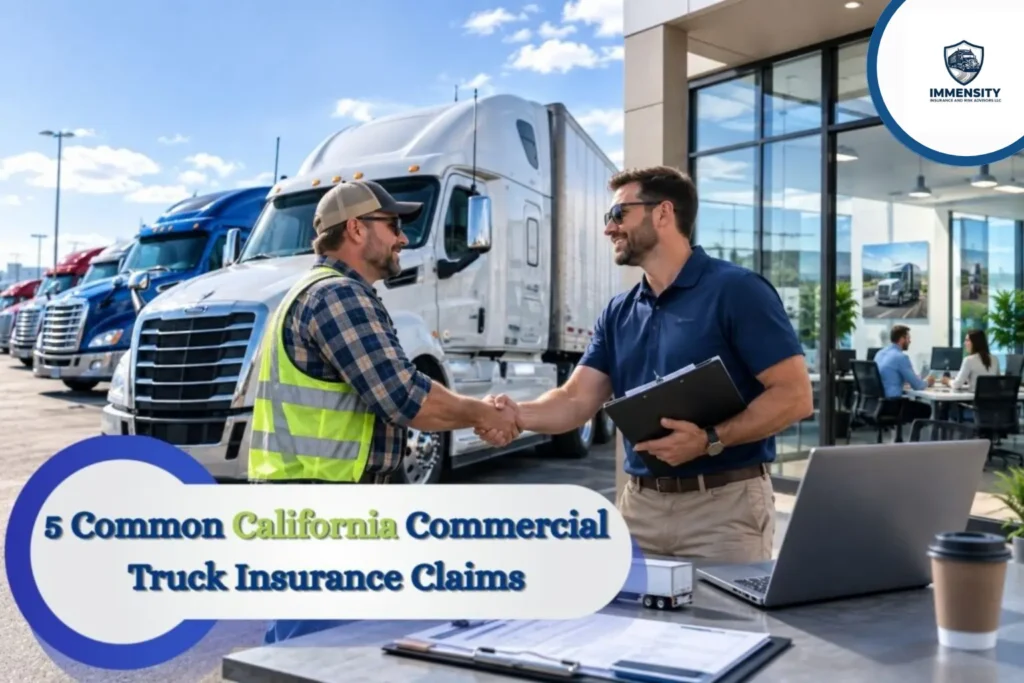
California has one of the busiest transportation networks in the country. From local deliveries to long-haul freight, commercial trucks move goods across cities, highways, and ports every day. Because of this activity, truck operators face several risks on the road. California commercial truck insurance helps trucking businesses prepare for these risks. However, understanding common claims is just as important as having a policy. Accidents, cargo damage, theft, and other incidents can create major expenses. Therefore, knowing what can lead to a claim helps you choose suitable coverage and manage risks. In this guide, we’ll explain five common claims and how the right insurance can help.
1. California Commercial Truck Insurance Claims for Vehicle Accidents
Truck accidents are among the most common claims faced by commercial trucking businesses. A collision can happen because of traffic congestion, poor weather, driver mistakes, mechanical problems, or unexpected road conditions.
California highways can become especially challenging during busy travel periods. Trucks also share roads with passenger vehicles, motorcycles, and other commercial vehicles. As a result, even a small mistake can lead to a serious accident.
When a truck causes an accident, the business may face costs related to injuries, property damage, legal expenses, and vehicle repairs. That’s why auto liability insurance coverage plays an important role.
How Liability Coverage Helps
Liability coverage can help pay for damages or injuries that your business is legally responsible for after a covered accident. However, policy limits and exclusions can vary.
For trucking businesses, choosing adequate limits is important. A serious accident involving a large commercial vehicle can result in substantial financial losses.
Moreover, businesses that operate across multiple states may need to consider federal and state insurance requirements. Proper planning can help reduce unexpected financial exposure.
2. Cargo Damage and Loss Claims
Trucking companies don’t only have to protect their vehicles. They also need to protect the goods they transport.
Cargo can become damaged because of collisions, improper loading, shifting freight, fire, theft, or other covered events. In some situations, the financial loss can be significant, especially when a truck is carrying expensive equipment, electronics, food, or other high-value products.
Why Motor Truck Cargo Insurance Coverage Matters
Motor truck cargo insurance coverage can help protect freight while it is being transported, subject to the terms of the policy.
For example, imagine a driver is transporting a shipment when a collision causes part of the cargo to become damaged. The trucking company could face a claim from the customer or shipper.
However, coverage depends on the specific policy. Some types of cargo may have exclusions, limitations, or special requirements. Therefore, trucking businesses should review their policies carefully before hauling high-value or specialized freight.
In addition, proper cargo handling can reduce the chance of a claim. Drivers and loading teams should secure freight correctly and inspect loads before departure.
3. Theft and Vandalism Claims
Truck theft and cargo theft can create serious problems for trucking businesses. Commercial trucks may carry valuable equipment and freight. Therefore, they can become attractive targets for thieves.
Theft can happen while a truck is parked at a facility, rest area, truck stop, or other location. Vandalism can also result in expensive repairs and downtime.
Protecting Your Truck From Physical Damage
Physical damage insurance for semi truck coverage can help protect the insured vehicle against certain covered losses, such as collision, theft, fire, or vandalism.
This type of protection can be especially useful for businesses that depend on their trucks every day. If a vehicle is seriously damaged, repair costs can quickly become expensive.
However, insurance is only one part of risk management. Truck operators should also use secure parking when possible. They can install tracking devices and follow basic security procedures.
Additionally, drivers should avoid leaving valuable cargo unattended for long periods. These simple steps may help reduce theft exposure.
4. Trailer and Equipment Damage Claims
Trailers are essential to many trucking operations. However, they can also create unique insurance risks.
A trucking company may use trailers owned by another company. In other cases, an operator may exchange or temporarily use equipment under a contractual arrangement.
If a trailer is damaged while under the insured’s responsibility, the business could face repair or replacement costs.
Trailer Interchange Insurance Coverage
Trailer interchange insurance coverage can help protect against certain physical damage to a trailer that the insured does not own but has responsibility for under a written trailer interchange agreement.
For example, a trucking company may pick up a trailer from another carrier. If the trailer is damaged in a covered accident, the business could become responsible for the loss.
Therefore, operators who regularly exchange trailers should review their contracts and insurance requirements. Having appropriate coverage can help reduce financial surprises.
5. Bobtail and General Liability Claims
Not every trucking-related incident happens while a truck is hauling cargo. Sometimes, a driver operates a truck without a trailer or without a load.
This situation is commonly known as bobtailing. Depending on the circumstances, a trucking business may need specific protection for certain risks associated with these operations.
Understanding Bobtail Truck Insurance
Bobtail truck insurance can provide liability protection for certain situations when a truck is being operated without a trailer or load, depending on the policy terms.
This coverage is different from other commercial truck insurance protections. Therefore, owner-operators and leased drivers should understand when their primary liability policy applies and when additional coverage may be needed.
Furthermore, trucking businesses should consider broader liability risks. A business can face claims involving property damage, bodily injury, or other third-party losses.
For this reason, general liability for truckers can be an important part of an overall insurance strategy. It may address certain business-related risks that aren’t covered by auto liability insurance.
Other Insurance Coverage Trucking Businesses Should Consider
The five claims above are common examples, but every trucking operation has different risks. Therefore, businesses should consider their vehicles, routes, contracts, cargo, drivers, and daily operations when reviewing insurance.
Here are several types of coverage that may be relevant:
- Commercial auto liability
- Motor truck cargo coverage
- Physical damage coverage
- General liability
- Trailer interchange coverage
- Bobtail coverage
- Uninsured or underinsured motorist coverage
- Workers’ compensation, where applicable
Coverage needs can also change as a business grows. For example, adding trucks or drivers can increase exposure. Expanding into new states can also create additional compliance requirements.
California Commercial Truck Insurance and Risk Management
Insurance can help protect a trucking business financially. Nevertheless, prevention should remain a priority.
First, trucking companies should maintain their vehicles according to manufacturer and regulatory requirements. Regular inspections can help identify mechanical problems before they become serious.
Next, companies should provide appropriate driver training. Defensive driving, safe following distances, proper lane changes, and fatigue management can reduce accident risks.
Furthermore, businesses should maintain accurate records. Driver files, maintenance records, inspection reports, cargo documentation, and accident information can become important after an incident.
Technology can help as well. Dash cameras, GPS tracking, electronic logging systems, and fleet monitoring tools can provide valuable information about vehicle operations.
Most importantly, businesses should review their coverage regularly. A policy that worked for a small operation may not provide the same level of protection after the company expands.
How to Choose the Right Coverage
Choosing insurance based only on price can create problems later. Instead, trucking businesses should look at the complete protection offered by a policy.
Start by identifying the types of vehicles you operate. Then consider what you haul, where you travel, and whether you operate under your own authority or a lease agreement.
You should also review your contracts. Shippers, brokers, motor carriers, and leasing companies may have specific insurance requirements.
If you operate beyond California, your insurance strategy may also need to account for interstate operations. Businesses searching for trucking insurance USA should make sure their coverage fits their operating territory and applicable requirements.
At the same time, compare policy limits, deductibles, exclusions, and endorsements. A lower premium may not always provide the protection your business needs.
How Claims Can Affect Your Trucking Business
A California commercial truck insurance claim can affect more than your immediate repair bill. An accident may cause downtime, missed deliveries, customer concerns, and additional business expenses.
For example, if a truck is unavailable after a major accident, the company may lose revenue while repairs are completed. A damaged shipment can also affect customer relationships.
Therefore, having a clear claims process is valuable. Drivers should know what to do after an accident.
They should first prioritize safety and contact emergency services when necessary. Next, they should document the scene, collect relevant information, and notify the appropriate parties.
Photos, witness information, police reports, and driver statements can all help with the claims process. However, drivers should avoid making statements about fault before the facts are properly reviewed.
What About an Auto Insurance Quote?
Truck insurance is different from personal vehicle insurance. A standard auto insurance quote may not provide the commercial coverage required for a trucking operation.
Commercial trucks have different risks because they are used for business purposes and may carry freight or specialized equipment.
Therefore, trucking businesses should request a commercial policy based on their actual operations. Providing accurate information about vehicles, drivers, cargo, routes, and business activities can help produce a more appropriate quote.
In addition, businesses should update their insurer when their operations change. This can include purchasing another truck, adding a driver, changing cargo types, or expanding operating areas.
Frequently Asked Questions
1. What is the most common commercial truck insurance claim?
Vehicle accidents are among the most common commercial trucking claims. Collisions can lead to property damage, bodily injury claims, vehicle repairs, and legal expenses.
2. Does California commercial truck insurance cover cargo damage?
Cargo protection generally requires appropriate motor truck cargo coverage. However, coverage depends on the policy, covered causes of loss, exclusions, limits, and the type of freight being transported.
3. What does physical damage insurance cover for a semi truck?
Physical damage coverage can protect an insured truck against certain covered losses, such as collision, theft, fire, or vandalism. The exact protection depends on the policy.
4. Do truckers need trailer interchange coverage?
Truckers who operate trailers they don’t own may need trailer interchange coverage, particularly when they have contractual responsibility for those trailers. Requirements depend on the agreement and insurance arrangements.
5. Is bobtail insurance different from commercial auto liability?
Yes. Bobtail coverage is designed for certain situations when a truck is operated without a trailer or load. Commercial auto liability has a broader role and applies according to the policy terms and operating circumstances.
Protect Your Trucking Business With the Right Coverage
Commercial trucking comes with real risks, but preparation can make those risks easier to manage. Accidents, cargo damage, theft, trailer damage, and liability incidents can all create unexpected costs.
Therefore, trucking businesses should build their insurance plans around their actual operations. They should also review coverage limits, exclusions, deductibles, and contractual requirements regularly.
Most importantly, don’t choose coverage based only on the lowest price. The right policy should provide meaningful protection while supporting your business and compliance needs.
For businesses looking for reliable insurance guidance, Immensity Insurance can help you explore commercial coverage options based on your trucking operation and specific needs.