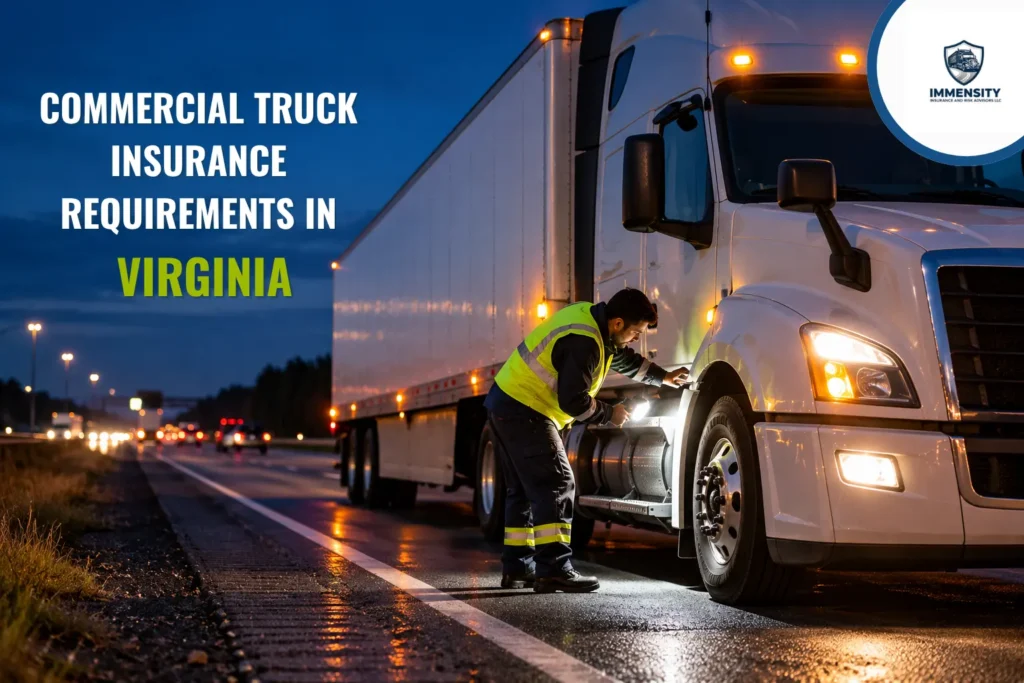
Virginia truck insurance requirements depend on your vehicle weight, cargo, and type of operation. For intrastate property carriers with vehicles over 10,000 pounds GVWR, Virginia requires at least $750,000 in public liability coverage. Smaller vehicles can face lower limits. Interstate carriers must follow federal insurance rules.
What Are the Commercial Truck Insurance Requirements in Virginia?
Virginia requires motor carriers to maintain insurance or other financial responsibility that meets state rules.
For intrastate property carriers, the required amount depends on the truck’s gross vehicle weight rating, or GVWR. Virginia law sets the following minimum public liability limits:
| Vehicle or operation | Minimum liability requirement |
|---|---|
| GVWR of 7,500 pounds or less | Virginia financial responsibility rules apply |
| GVWR over 7,500 to 10,000 pounds | $300,000 |
| GVWR over 10,000 pounds | $750,000 |
| Household goods carriers | $750,000 |
| Intrastate cargo requirement | $50,000 in applicable cases |
Virginia law also sets a $50,000 minimum cargo insurance requirement for certain intrastate motor carriers. However, the law provides exceptions for some carriers that do not transport household goods.
These amounts represent legal minimums. Your business may need higher limits because of customer contracts, broker requirements, lender rules, or the type of freight you carry.
Therefore, checking your exact operation before buying a policy can help you avoid a coverage problem. Virginia Law
How Does Virginia Determine Liability Insurance Limits?
Virginia mainly uses the vehicle’s GVWR to determine the minimum liability requirement for intrastate property carriers.
A truck with a GVWR above 10,000 pounds generally falls under the $750,000 minimum. A vehicle above 7,500 pounds but no more than 10,000 pounds generally needs $300,000.
For vehicles at 7,500 pounds or less, different rules apply. The coverage requirement can also change based on when the vehicle accepts a property transportation request.
As a result, truck owners should not select coverage based only on the truck’s physical size or appearance. The GVWR listed for the vehicle matters.
Virginia DMV also explains that carriers must maintain required insurance and, in many cases, provide proof to Motor Carrier Services. If a required filing expires or gets canceled, the carrier can face action against its operating authority. Virginia DMV
Does Interstate Trucking Have Different Insurance Requirements?
Yes. Interstate carriers must follow federal insurance requirements in addition to applicable state rules.
The Federal Motor Carrier Safety Administration lists $750,000 as the federal minimum bodily injury and property damage requirement for for-hire property carriers with a GVWR of 10,001 pounds or more when they transport non-hazardous property.
For for-hire property carriers with a GVWR below 10,001 pounds, the federal minimum generally stands at $300,000.
Hazardous materials can create much higher requirements. Depending on the material and operation, federal limits can reach $1 million or $5 million.
Federal rules also require specific insurance filings for carriers subject to FMCSA financial responsibility rules. The insurer normally handles the required filing process.
Therefore, a Virginia carrier that crosses state lines should check both Virginia requirements and federal requirements before operating.
What Does Commercial Auto Liability Insurance Cover?
Commercial auto liability insurance helps address covered third-party bodily injury and property damage claims that result from an insured commercial vehicle accident.
This coverage forms the foundation of many commercial trucking insurance USA policies. However, liability insurance does not normally protect your own truck from physical damage.
For example, suppose a truck causes an accident and damages another vehicle. Liability coverage may respond to the covered claim according to the policy terms and limits.
On the other hand, damage to the insured truck may require physical damage coverage.
The policy limit also matters. Meeting the Virginia minimum does not always mean the limit meets your customer’s requirements. Some brokers and shippers may request higher limits before accepting a carrier.
For that reason, truck operators should compare legal requirements with their business contracts.
What Other Coverage Should Virginia Truckers Consider?
Virginia truck insurance involves more than liability. Depending on the operation, several additional coverage options may help address different risks.
Motor Truck Cargo Insurance
Motor truck cargo insurance can protect covered freight against losses listed in the policy.
Cargo type, value, route, and coverage limits can affect the policy and premium. Some customers also require carriers to carry cargo insurance before they tender loads.
Virginia law sets a $50,000 cargo insurance requirement for certain intrastate motor carriers. However, exceptions apply. For example, the law does not require certain carriers that do not transport household goods to file cargo insurance with the state.
Therefore, truckers should separate legal cargo requirements from customer cargo requirements.
Physical Damage Coverage
Physical damage coverage can help protect the insured truck against covered losses.
This coverage can include collision and comprehensive protection, depending on the policy. Collision coverage can address certain accident-related damage. Comprehensive coverage can address other covered losses, such as theft or certain weather-related events.
The lender may also require physical damage coverage when a truck has financing.
Your physical damage coverage limit should reflect the value of the equipment and the terms of the policy.
Trucking General Liability Insurance
Trucking general liability insurance can address certain business liability risks that do not fall under commercial auto liability.
For example, a trucking business may face a claim connected to its business premises or certain operations away from the road. The policy wording determines what the coverage includes.
Therefore, general liability can complement commercial auto coverage. It does not replace the liability policy that applies to the truck.
Trailer Interchange Coverage
Trailer interchange coverage may help protect a trailer that belongs to another party when a written interchange agreement applies.
This coverage can matter for carriers that regularly use trailers they do not own. The agreement and policy terms determine when coverage applies.
Immensity Insurance lists trailer interchange coverage among the options available for trucking businesses and owner-operators.
Bobtail Insurance
Bobtail insurance can apply to certain situations when a truck operates without a trailer.
The need for this coverage depends on the driver’s operating arrangement and the insurance provided by the motor carrier. Lease agreements can also affect responsibility.
Bobtail insurance cost varies by factors such as driver history, vehicle details, location, coverage limits, and underwriting rules. Therefore, truckers should review their existing policy before purchasing separate coverage.
Do Owner-Operators Need Special Truck Insurance in Virginia?
Owner-operators need coverage that matches their authority, lease arrangement, equipment, cargo, and operating area.
Owner operators truck insurance may include several coverage types. These can include primary liability, physical damage, motor truck cargo, non-trucking liability, trailer interchange, and bobtail coverage.
However, every owner-operator has a different setup.
For example, an owner-operator who leases to a motor carrier may have primary liability handled under the carrier’s policy. The owner may still need other coverage for specific situations.
An owner-operator with their own authority may have different insurance responsibilities.
Before buying a policy, review:
- Your operating authority
- Truck GVWR
- Cargo type
- Operating radius
- Lease agreement
- Driver history
- Customer requirements
- Existing insurance
- State and federal filing requirements
Immensity Insurance works with owner-operators and trucking businesses to review coverage options based on their operations.
Do Box Trucks Need Commercial Truck Insurance in Virginia?
Yes, a box truck used for business may need commercial auto insurance, but the exact requirement depends on its GVWR and operation.
A box truck insurance company may consider the truck’s weight, cargo, business use, operating area, drivers, and claims history when reviewing coverage.
For an intrastate property carrier, a box truck above 10,000 pounds GVWR generally falls under Virginia’s $750,000 minimum liability requirement. A box truck above 7,500 but no more than 10,000 pounds generally falls under the $300,000 requirement.
The business should also check whether customers require cargo insurance or higher liability limits.
Therefore, box truck owners should identify their GVWR before comparing insurance options.
What Insurance Do Commercial Dump Trucks Need?
Commercial dump truck insurance should match the truck’s use, GVWR, cargo, and operating area.
Dump trucks may work on construction sites, haul materials, and travel between different job locations. These activities can create different insurance needs than ordinary freight transportation.
Commercial dump truck insurance may include commercial auto liability, physical damage, general liability, and other coverage options.
The legal minimum still depends on the applicable Virginia rules. A business should also consider contract requirements from contractors or project owners.
For example, a construction company may require a specific liability limit before allowing a dump truck operator onto a job site.
Reviewing these requirements before purchasing insurance can help the business select appropriate coverage.
Does Virginia Require Proof of Truck Insurance?
Yes, many Virginia motor carriers must provide proof of insurance to the Department of Motor Vehicles.
Virginia DMV states that motor carriers generally must keep proof of insurance on file with Motor Carrier Services. Some exceptions apply.
For intrastate property carriers with vehicles above 10,000 pounds GVWR, Virginia requires proof of liability insurance. Applicable cargo insurance proof may also apply.
The DMV can take action when required insurance expires or gets canceled. A carrier may receive a suspension order and could face revocation if it does not correct the issue.
Virginia also requires proof of insurance before certain operating authority certificates or permits can be issued.
How Can Trucking Businesses Stay Compliant?
Trucking businesses can reduce compliance problems by reviewing their insurance and operating information regularly.
Start with the vehicle’s GVWR. Next, identify whether the business operates only inside Virginia or crosses state lines.
Then review the cargo and operating authority. After that, check customer contracts for higher insurance limits.
A simple checklist can help:
- Confirm each truck’s GVWR.
- Identify intrastate or interstate operations.
- Check the required liability limit.
- Review cargo insurance requirements.
- Confirm operating authority.
- Check required DMV filings.
- Review FMCSA filings when applicable.
- Check broker and shipper requirements.
- Review physical damage coverage.
- Confirm bobtail and trailer coverage needs.
Finally, review the policy whenever the business adds trucks, changes cargo, expands its operating area, or changes its authority.
How Much Does Commercial Truck Insurance Cost in Virginia?
There is no single price for commercial truck insurance in Virginia.
Insurance companies can consider several factors when calculating premiums. These may include truck type, GVWR, cargo, operating radius, driver history, claims history, coverage limits, deductibles, and business experience.
For example, two trucking businesses may operate similar trucks but receive different quotes because their drivers, cargo, or claims history differ.
The motor truck cargo insurance cost can also vary based on cargo value and risk.
For this reason, a personalized quote provides a better estimate than a general industry average.
You can also compare coverage options and pricing factors through Immensity Insurance’s commercial truck insurance resources.
What Should You Check Before Buying Virginia Truck Insurance?
Before buying a policy, check the legal requirements and the needs of your business.
Start by confirming your vehicle weight and operating authority. Then identify your cargo and operating area. Next, check whether your broker, shipper, lender, or contract requires higher limits.
You should also review the policy’s exclusions and deductibles.
Pay attention to these areas:
- Commercial auto liability insurance
- Motor truck cargo insurance
- Physical damage coverage
- Trucking general liability insurance
- Trailer interchange coverage
- Bobtail coverage
- Uninsured and underinsured motorist coverage
- Applicable state filings
- Applicable federal filings
A low premium does not always mean the policy fits your operation. Coverage limits and exclusions matter just as much as price.
Frequently Asked Questions
What is the minimum commercial truck insurance in Virginia?
For intrastate property carriers, Virginia requires $750,000 in public liability for vehicles with a GVWR above 10,000 pounds. Vehicles above 7,500 and up to 10,000 pounds generally need $300,000. Different rules apply to lighter vehicles and certain exempt operations.
Does Virginia require cargo insurance for truckers?
Virginia requires $50,000 in cargo insurance for certain intrastate motor carriers. However, the law provides exceptions. Carriers that do not transport household goods may not need to file cargo insurance with DMV. Customer contracts can also create separate cargo coverage requirements.
Do owner-operators need commercial truck insurance in Virginia?
Yes, owner-operators generally need insurance that matches their operating authority and business arrangement. Coverage can include auto liability, physical damage, cargo, trailer interchange, bobtail, and other options. The exact combination depends on whether the owner-operator works under a lease or operates under their own authority.
Is $750,000 enough truck insurance in Virginia?
$750,000 can satisfy the Virginia minimum for certain intrastate property carriers with vehicles above 10,000 pounds GVWR. However, a higher limit may apply to specific operations or contracts. Interstate carriers must also follow federal requirements. Review your authority and customer agreements before selecting limits.
How much does commercial truck insurance cost in Virginia?
Commercial truck insurance costs vary from one business to another. Insurers may consider the vehicle, GVWR, cargo, operating radius, drivers, claims history, coverage limits, deductibles, and business experience. Therefore, a personalized quote provides a more useful estimate than a general price range.
Conclusion: Are You Ready to Meet Virginia Truck Insurance Requirements?
Understanding commercial truck insurance Virginia requirements starts with your vehicle, operation, and cargo.
Virginia sets different liability requirements based on GVWR. Interstate carriers must also follow federal rules. In addition, some operations need cargo coverage and insurance filings.
The right policy should address legal requirements and the actual risks of your business. It should also match your contracts and operating authority.
Are you reviewing your truck insurance before starting or expanding your Virginia operation?
Contact Immensity Insurance to discuss your commercial trucking coverage options and get a policy review based on your business needs.