Comprehensive and Collision Insurance: Why It Matters
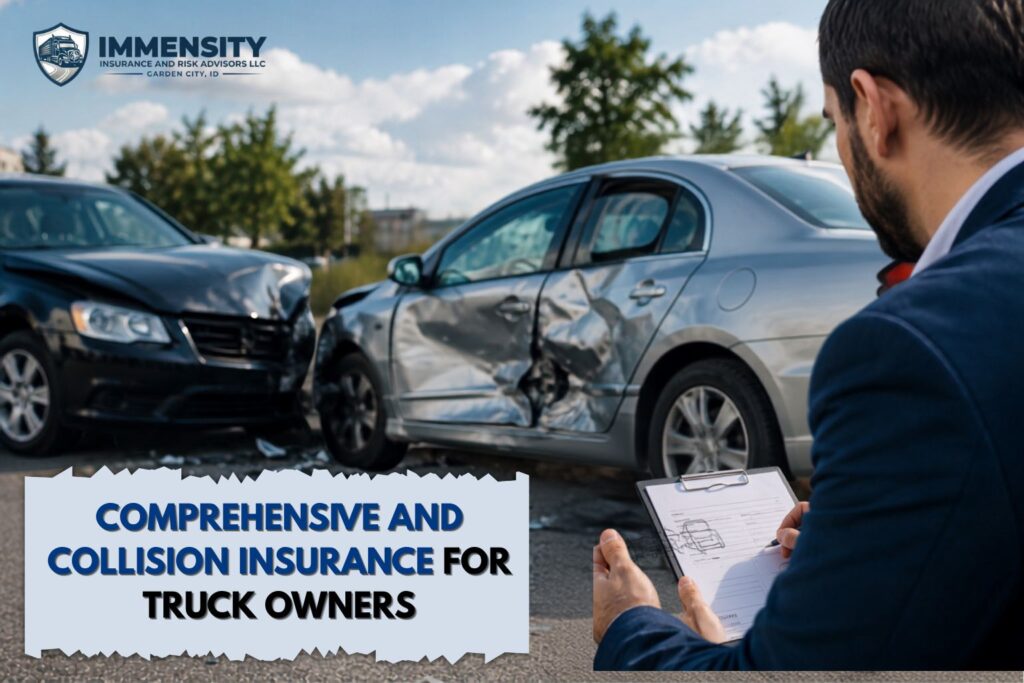
Comprehensive and Collision Insurance can play an important role in protecting commercial trucks from costly physical damage. For truck owners, accidents are not the only concern. A vehicle can also face damage from theft, vandalism, falling objects, severe weather, fire, or other unexpected events. Therefore, having the right physical damage protection can help reduce the financial impact of these situations. Moreover, truck owners often depend on their vehicles to generate income. If a truck requires expensive repairs after an accident or another covered event, the resulting downtime can affect daily operations. Comprehensive and Collision Insurance gives owners an additional layer of protection for their valuable commercial vehicles.
Commercial trucking involves many risks on the road and while equipment remains parked. Consequently, truck owners should understand the difference between collision and comprehensive coverage before choosing a commercial truck insurance policy.
What Is Comprehensive and Collision Insurance?
Comprehensive and Collision Insurance generally refers to two different types of physical damage coverage: comprehensive insurance and collision insurance. Although they work differently, both can help protect a commercial truck from significant repair or replacement expenses.
Collision coverage generally applies when a covered truck is damaged in an accident involving another vehicle or object. For example, it may help cover damage resulting from hitting another vehicle, striking a stationary object, or rolling over.
On the other hand, comprehensive coverage typically addresses covered losses that do not result from a collision. These may include theft, vandalism, fire, falling objects, hail, windstorms, and certain other non-collision events.
Therefore, combining both coverages can provide broader protection for a commercial truck.
How Collision Insurance Protects Truck Owners
Collision coverage can be particularly valuable because commercial trucks can be expensive to repair. Even a relatively minor accident may result in substantial costs because trucks contain specialized equipment, heavy-duty components, and expensive parts.
For instance, collision coverage may apply when a truck:
- Hits another vehicle
- Strikes a pole, barrier, or building
- Rolls over during an accident
- Sustains damage in a covered collision
- Requires repairs after an accident with an object
However, coverage terms, deductibles, exclusions, and policy limits can vary. Therefore, truck owners should review their policy carefully instead of assuming every type of damage will be covered.
How Comprehensive Insurance Works
Comprehensive coverage addresses a different category of risks. Instead of focusing on crashes, it generally protects against certain non-collision events that can damage or destroy a truck.
For example, comprehensive coverage may help with covered losses caused by:
- Theft
- Vandalism
- Fire
- Hail
- Windstorms
- Falling objects
- Certain natural events
- Other covered non-collision incidents
As a result, Comprehensive and Collision Insurance can provide more complete physical damage protection than choosing collision coverage alone.
Truck owners should also remember that comprehensive coverage does not automatically cover every possible loss. Policy conditions and exclusions determine whether a particular claim qualifies.
Comprehensive and Collision Insurance for Commercial Trucks
Commercial trucks represent a major investment for owner-operators, fleet operators, and trucking businesses. Because these vehicles are essential business assets, physical damage can create both repair expenses and operational challenges.
With Comprehensive and Collision Insurance, truck owners can prepare for several common risks involving their vehicles. In addition, lenders or leasing companies may require physical damage coverage when a truck is financed or leased.
For owner-operators, this protection can be especially important. A truck that remains out of service for several days may prevent the owner from accepting loads. Consequently, the financial effect can extend beyond the repair bill.
Before purchasing coverage, truck owners should consider the truck’s value, usage, financing requirements, deductible, operating territory, and overall risk exposure.
Factors That Can Affect Insurance Costs
The cost of Comprehensive and Collision Insurance can vary significantly between truck owners. Insurance providers generally consider several factors when determining premiums.
These factors can include:
Vehicle Value
A newer or more expensive commercial truck may cost more to insure because its repair or replacement value is higher.
Driving History
A driver’s accident and violation history can influence insurance pricing. Therefore, maintaining a strong driving record may help support better insurance options.
Type of Trucking
The type of freight, operating radius, and trucking activity can affect the overall risk assessment.
Deductible
A higher deductible may reduce the premium, while a lower deductible can increase the premium. However, truck owners should select a deductible they can realistically afford after a covered loss.
Coverage Limits
Higher limits and broader protection can affect the total premium. Therefore, comparing coverage rather than focusing only on price is important.
Other Commercial Truck Insurance Coverages to Consider
Comprehensive and Collision Insurance focuses primarily on physical damage to the insured truck. However, commercial truck owners may need several other types of coverage to address different business risks.
Motor Truck Cargo Insurance Coverage
Motor truck cargo insurance coverage can help protect covered freight while it is being transported. Truck owners may also request a motor truck cargo insurance quote based on their operation, cargo type, limits, and other risk factors.
General Liability Insurance
General liability insurance in US trucking operations can address certain third-party bodily injury and property damage risks associated with business activities. The general liability insurance cost depends on factors such as business operations, limits, claims history, location, and risk exposure.
Bobtail Insurance
Bobtail coverage can protect against certain covered liabilities when a commercial truck is operated without a trailer or without a load, depending on the policy terms. Truck owners comparing bobtail insurance companies should review coverage conditions rather than choosing solely on price.
The bobtail truck insurance cost can vary based on driving patterns, coverage limits, location, history, and other underwriting factors.
How to Choose the Right Physical Damage Coverage
Selecting Comprehensive and Collision Insurance requires more than comparing premiums. Truck owners should first determine the actual value of their equipment and identify the risks they face regularly.
Next, review the deductible and coverage limits. A policy with a low premium may not provide the level of protection needed for an expensive commercial vehicle.
Additionally, ask insurance providers about exclusions, claim procedures, covered causes of loss, and valuation methods. This approach can help truck owners understand what their policy actually provides.
Furthermore, comparing quotes from reputable providers can make it easier to identify coverage that fits the business.
Why Truck Owners Should Compare Policies
Commercial trucking risks can vary widely from one operation to another. An owner-operator hauling general freight may have different needs from a fleet transporting specialized equipment.
Therefore, truck owners should provide accurate information when requesting quotes. Details about vehicle types, cargo, operating locations, mileage, drivers, and business activities can help insurers evaluate the risk more accurately.
A knowledgeable collision insurance company can also explain available options and help truck owners understand how physical damage coverage works alongside other commercial insurance policies.
Frequently Asked Questions
1. What does Comprehensive and Collision Insurance cover?
Comprehensive and Collision Insurance generally combines protection for covered collision-related damage and covered non-collision losses. Collision may address accidents, while comprehensive may address events such as theft, vandalism, fire, hail, or falling objects.
2. Is Comprehensive and Collision Insurance required for commercial trucks?
Requirements can depend on state regulations, financing or leasing agreements, and business circumstances. Even when it is not legally required, lenders may require physical damage coverage for financed equipment.
3. Does comprehensive insurance cover accidents?
Generally, comprehensive coverage is designed for covered non-collision losses. Damage caused by a collision is generally addressed through collision coverage, subject to the policy terms.
4. How can truck owners reduce insurance costs?
Truck owners can compare multiple quotes, maintain good driving records, select appropriate deductibles, implement safety practices, and review coverage regularly. However, reducing price should not mean removing important protection.
5. Is physical damage coverage the same as liability insurance?
No. Physical damage coverage generally protects the insured truck against covered losses. Liability insurance generally addresses covered third-party claims arising from accidents or business activities.
Protect Your Truck and Keep Your Business Moving
Choosing the right Comprehensive and Collision Insurance can help commercial truck owners prepare for unexpected vehicle damage and reduce the financial pressure associated with covered losses. Moreover, combining physical damage protection with appropriate liability, cargo, and other commercial truck insurance coverages can create a more complete risk management strategy. Before purchasing a policy, compare limits, deductibles, exclusions, and pricing based on your actual trucking operation. For truck owners looking for dependable coverage options, Immensity Insurance can help businesses explore commercial trucking insurance solutions suited to their needs.