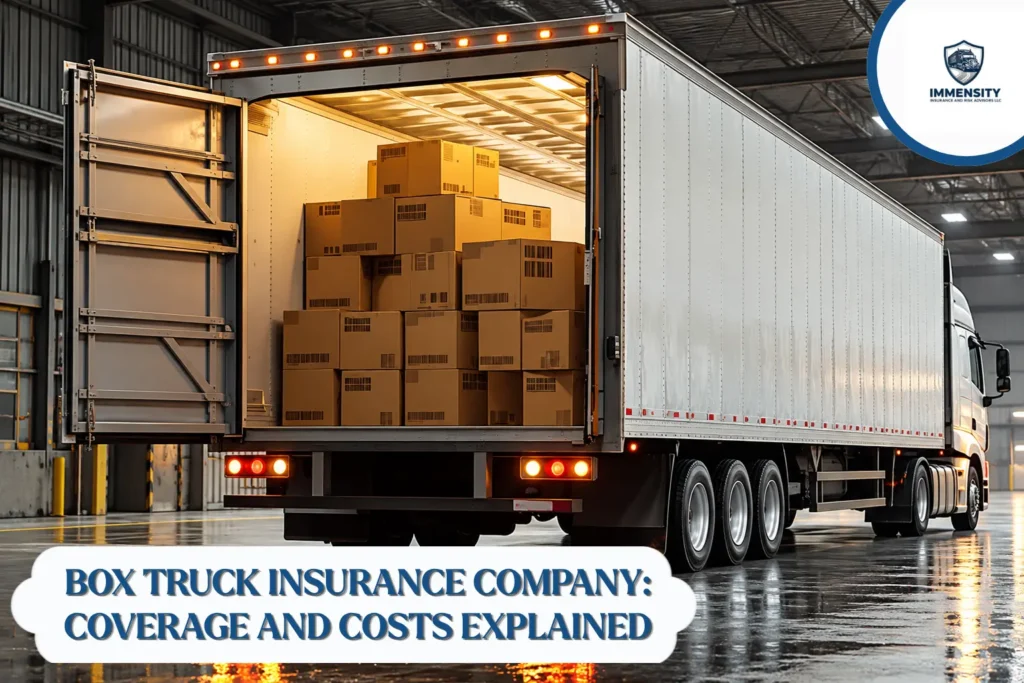
A box truck insurance company helps businesses protect their vehicles, cargo, and financial interests with commercial coverage tailored to how they operate. For qualifying for-hire property carriers operating vehicles with a GVWR of 10,001 pounds or more, FMCSA lists a $750,000 federal minimum for non-hazardous property carriers.
What Is Box Truck Insurance?
Box truck insurance is commercial coverage designed for businesses that use box trucks for deliveries, freight transportation, moving services, distribution, contracting, and other business activities.
A personal auto policy generally is not designed for commercial hauling. Instead, businesses need coverage based on how the truck is used, what it carries, where it travels, and who operates it.
The main parts of a box truck policy can include:
- Auto liability insurance coverage
- Motor truck cargo insurance coverage
- Physical damage truck insurance
- General liability for truckers
- Uninsured or underinsured motorist coverage
- Bobtail coverage when applicable
- Trailer interchange coverage when applicable
The exact combination depends on the operation and policy terms. Immensity Insurance lists commercial box truck coverage among the transportation risks it helps businesses evaluate.
What Coverage Does a Box Truck Insurance Company Offer?
A box truck insurance company may offer several coverage options because one policy does not address every risk faced by a commercial trucking business.
Auto Liability Insurance Coverage
Auto liability insurance coverage helps address covered third-party bodily injury and property damage claims arising from an insured commercial vehicle accident.
This is one of the most important coverages for commercial truck operators. Federal requirements can apply to qualifying interstate carriers, while states and contracts can impose additional requirements.
For example, FMCSA currently lists $750,000 as the minimum public-liability limit for qualifying for-hire interstate property carriers operating vehicles with a GVWR of 10,001 pounds or more and transporting non-hazardous property.
The required limit for a particular business can be different. Therefore, operators should confirm federal, state, broker, shipper, and contract requirements before choosing limits.
Motor Truck Cargo Insurance Coverage
Motor truck cargo insurance coverage is designed to address covered losses involving customer freight while it is being transported.
Depending on the policy, covered risks may include theft, fire, collision, overturn, and certain types of cargo damage. Policy exclusions, deductibles, limits, and endorsements determine what actually qualifies for payment.
Cargo insurance is especially important for businesses transporting goods belonging to customers. Some brokers and shippers may also require proof of cargo coverage before assigning freight.
Physical Damage Truck Insurance
Physical damage truck insurance protects the insured vehicle against covered damage rather than damage caused to another party.
It commonly combines collision and comprehensive coverage. Depending on the policy, covered events can include collisions, rollovers, theft, fire, vandalism, hail, storms, falling objects, and other listed risks.
This coverage can be important because a box truck is a business asset. A serious accident or theft can create repair, replacement, and downtime expenses.
General Liability for Truckers
General liability for truckers addresses certain third-party claims connected with business activities that may fall outside normal vehicle liability.
For example, a customer could suffer an injury at a business location, or an employee could damage third-party property during a covered non-auto activity. Depending on the policy, general liability can also address certain advertising injury and legal defense costs.
This coverage is different from commercial auto liability. Understanding that distinction can help prevent gaps between road-related and general business risks.
Trailer Interchange Coverage
Trailer interchange coverage can protect against covered physical damage to a trailer that the trucking business does not own but has under its responsibility through an interchange agreement.
Potential covered events may include collision, theft, fire, vandalism, and other listed causes of loss. The policy terms determine the actual protection.
This coverage can be useful for operators who regularly use trailers belonging to another carrier.
Bobtail Insurance
Bobtail insurance generally provides liability protection when a tractor is operated without a trailer under circumstances covered by the policy.
For example, a tractor may travel without a trailer after completing a delivery. The applicable coverage depends on the policy, operating arrangement, and circumstances of the trip.
A business should not assume that every off-dispatch or trailer-free trip has the same protection. Reviewing the policy with an insurance professional can clarify when coverage applies.
How Much Does Box Truck Insurance Cost?
Box truck insurance costs vary widely because insurers evaluate the specific risk rather than applying one national price to every operator.
Recent 2026 market guides place many box truck operations within broad ranges of approximately $231 to $950 per month, although some businesses can pay more depending on their operation, truck, limits, cargo, and driving history.
Progressive Commercial also states that pricing varies based on factors such as truck size, number of vehicles, coverage limits, and business operations.
These figures are planning ranges, not guaranteed quotes.
What Factors Affect Box Truck Insurance Costs?
The following factors can have a significant effect on premiums:
| Pricing Factor | Why It Matters | Possible Effect |
|---|---|---|
| Truck size and value | Larger or more valuable trucks can create greater claim exposure | May increase premium |
| Driving history | Accidents and violations can affect underwriting | May increase premium |
| Cargo type | Different commodities carry different risks | Can change pricing |
| Operating radius | More miles and wider operating areas can increase exposure | May increase premium |
| Coverage limits | Higher limits provide more protection | Usually increases premium |
| Claims history | Past losses help insurers assess risk | May affect premium |
| Number of trucks | Fleets create different exposure than single units | Changes policy structure |
| Business experience | New ventures have less operating history | Can affect pricing |
Immensity Insurance identifies vehicle type, vehicle value, cargo, operating radius, driver experience, driving history, number of vehicles, business operations, claims history, and selected limits as factors that can affect available coverage and pricing.
What Insurance Does a Box Truck Owner-Operator Need?
An owner-operator may need several forms of commercial trucking coverage depending on the business structure and contracts.
A typical insurance discussion can include:
- Commercial auto liability for third-party accident claims.
- Physical damage for covered losses involving the insured truck.
- Motor truck cargo for covered freight losses.
- General liability for certain non-auto business risks.
- Bobtail coverage when the operating arrangement creates a need for it.
- Trailer interchange coverage when using non-owned trailers under an interchange agreement.
An owner-operator working under another motor carrier may have different insurance responsibilities from someone operating under their own authority.
For that reason, owner operators truck insurance should be based on the actual lease agreement, authority, equipment, cargo, routes, and contractual requirements.
How Can You Choose the Right Box Truck Insurance Company?
Choosing among trucking insurance companies requires more than comparing the lowest premium.
First, confirm that the provider understands your type of operation. A local delivery business may have different needs from a long-distance freight carrier.
Next, compare coverage limits and exclusions. A lower premium may reflect lower limits, higher deductibles, or narrower coverage.
Also, ask whether the policy can address the certificates and contractual requirements you receive from brokers and shippers.
Finally, provide accurate information about your truck, cargo, drivers, operating radius, and business activities. Incomplete information can create problems when coverage is evaluated or a claim occurs.
A commercial trucking insurance USA policy should match the way your business actually operates rather than relying on a generic package.
Is Box Truck Insurance Legally Required?
Commercial insurance requirements depend on how and where the box truck operates.
For qualifying interstate for-hire property carriers with vehicles at or above the applicable 10,001-pound GVWR threshold, FMCSA lists $750,000 in minimum public liability coverage for non-hazardous property. FMCSA also notes exemptions and different limits for certain vehicle sizes and hazardous commodities.
State requirements can differ for intrastate operations. In addition, brokers, shippers, lenders, and contracts may require limits that exceed the federal minimum.
Cargo insurance is another area where requirements vary. FMCSA states that household-goods carriers and freight forwarders of household goods are required to maintain cargo insurance under federal rules.
Therefore, operators should verify the requirements that apply to their specific authority and operation.
What Should You Prepare Before Requesting a Quote?
Preparing accurate information can make the quoting process more efficient.
A box truck operator should be ready to provide information such as:
- Truck year, make, model, and value
- GVWR and vehicle use
- Cargo or commodities transported
- Operating radius
- States where the truck operates
- Driver information
- Driving and claims history
- Current coverage
- Desired liability limits
- Cargo limits
- Trailer arrangements
- Business and authority information
You may also need certificates of insurance for brokers, customers, or other business partners.
The more accurately the operation is described, the easier it is for an insurance professional to evaluate appropriate options.
What Should You Compare Before Buying Coverage?
The best comparison focuses on protection, not just premium.
Review these items side by side:
- Liability limits
- Cargo limits
- Physical damage deductible
- Covered and excluded causes of loss
- Trailer coverage
- Bobtail protection
- General liability
- Filing requirements
- Certificate requirements
- Policy conditions
- Payment terms
- Claims process
Price still matters, especially for owner-operators managing tight operating budgets. However, choosing coverage only because it has the lowest monthly premium can create problems if an important exposure is left uninsured.
FAQs
1. How much does box truck insurance cost?
Box truck insurance can range from several hundred dollars per month to more than $1,000 depending on the operation. Recent 2026 industry estimates commonly place many operators around $231 to $950 monthly. Truck value, cargo, driving history, operating radius, coverage limits, and business experience can all affect the final premium.
2. What insurance does a box truck need?
A box truck may need commercial auto liability, physical damage, motor truck cargo, and general liability coverage. Some operators may also need bobtail or trailer interchange protection. The correct combination depends on how the truck is used, what it carries, where it operates, ownership arrangements, applicable regulations, and contractual requirements.
4. Does cargo insurance cover the box truck?
No. Motor truck cargo insurance is designed to address covered losses involving freight being transported, while physical damage coverage addresses covered damage to the insured truck. These are separate coverages. A policy can have different limits, deductibles, exclusions, and conditions for each, so operators should review the actual policy wording.
5. How can I get a box truck insurance quote?
To request a quote, prepare your truck information, vehicle value, cargo type, operating radius, driver history, claims history, desired limits, and business details. An insurance professional can then evaluate available options. Comparing coverage terms as well as premium can help you choose protection that fits your operation.
Conclusion:
The right box truck insurance company should help you match coverage to your truck, cargo, drivers, routes, and business responsibilities. Auto liability, cargo, physical damage, general liability, bobtail, and trailer interchange coverage each address different risks.
If you are comparing trucking insurance companies, start by identifying the coverage required for your operation and then compare limits, exclusions, deductibles, pricing, and contractual requirements.
Need help reviewing your box truck coverage? Contact Immensity Insurance to discuss your commercial trucking insurance options and request a personalized quote based on your business needs.