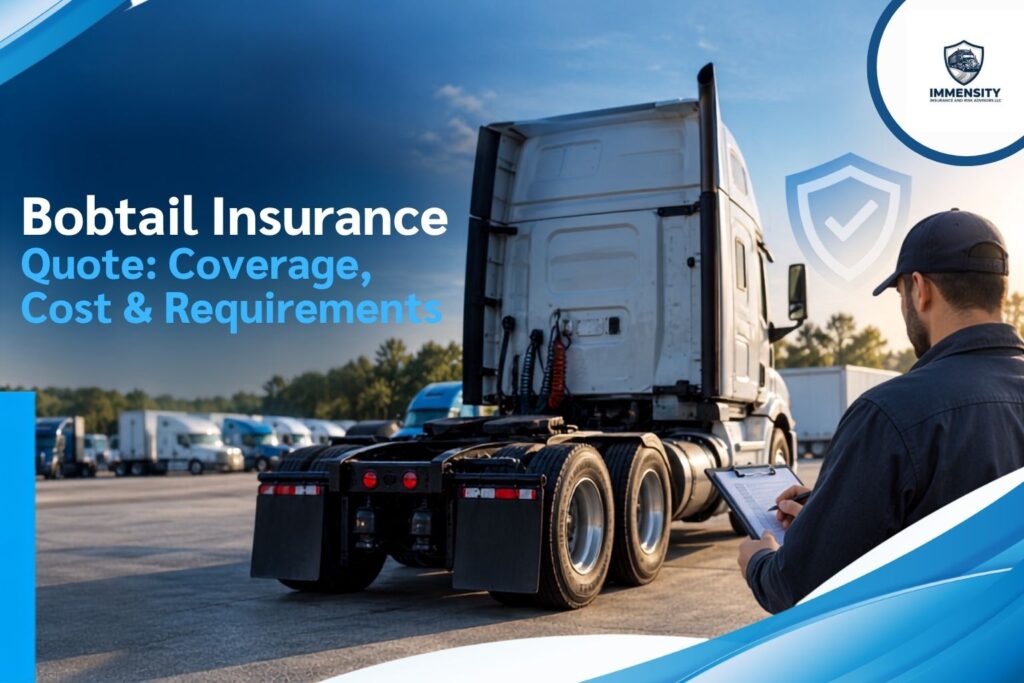
If you are a truck driver or owner-operator, getting a bobtail insurance quote can help you understand how much protection you need when driving a commercial truck without a trailer or without a load. Although your regular trucking policy may provide broad protection, it does not always cover every situation that can happen when you are operating your truck without a trailer. Therefore, understanding bobtail coverage, its costs, requirements, and policy limits is important before choosing a policy. In addition, comparing quotes can help you find coverage that fits your business, driving habits, and budget without paying for protection you may not actually need.
What Is Bobtail Insurance?
Bobtail insurance is a type of commercial truck liability coverage designed for specific situations when a tractor is being driven without a trailer attached.
For example, imagine that you have just delivered a load and dropped the trailer at the delivery location. You then drive your tractor to another location without pulling a trailer. If an accident occurs during that trip, bobtail coverage may help address certain liability expenses.
However, bobtail insurance is not the same as general commercial trucking insurance. Instead, it is designed for a particular operating situation.
This distinction matters because many owner-operators assume their primary policy automatically covers every trip. In reality, coverage depends on the policy language, your motor carrier agreement, and how you are using the truck at the time of an incident.
When Does Bobtail Coverage Apply?
Bobtail coverage generally applies when you are operating your tractor without a trailer after completing a commercial trip or while traveling outside the scope of your motor carrier’s dispatch.
The exact circumstances can vary by policy. Therefore, always review the policy wording before assuming a particular trip is covered.
Common situations may include:
- Driving without a trailer after completing a delivery
- Returning to a terminal without a trailer
- Traveling between locations while not under dispatch
- Moving a tractor without an attached trailer
- Driving for personal or non-dispatched purposes, depending on policy terms
Because policies differ, getting a bobtail insurance quote should involve more than simply looking at the premium. You should also understand when the coverage starts, when it ends, and what exclusions apply.
Bobtail Insurance Quote: What Does It Cover?
A bobtail insurance quote typically reflects liability protection for specific situations involving a tractor without a trailer.
If you cause an accident while bobtailing, you could face expenses involving another person’s vehicle, property, medical bills, or legal claims. Liability coverage can help address eligible costs up to the policy limit.
Depending on the policy, coverage may help with:
- Third-party bodily injury claims
- Third-party property damage
- Legal defense expenses
- Accident-related liability claims
- Certain settlement costs
However, bobtail insurance generally does not replace every type of trucking insurance.
For instance, it may not cover physical damage to your own tractor. If you want protection for your truck itself, you may need physical damage insurance for semi truck coverage.
Likewise, cargo protection requires a different type of policy. Motor truck cargo insurance coverage is designed to protect against covered losses involving freight being transported.
Bobtail Insurance vs. Primary Trucking Insurance
Primary commercial trucking insurance typically provides broader protection while you are operating under your motor carrier’s authority and within the scope of your business operations.
Bobtail coverage, by comparison, focuses on specific situations when you are operating without a trailer.
That means these policies can work together rather than compete with each other.
For example, an owner-operator may have:
- Primary commercial auto liability coverage
- Bobtail or non-trucking liability coverage
- Motor truck cargo insurance coverage
- Physical damage coverage
- Trailer-related coverage when applicable
The right combination depends on your operation, lease agreement, authority, and the type of work you perform.
How Much Does Bobtail Insurance Cost?
One of the most common questions truckers ask is about bobtail insurance cost.
There is no single price that applies to every driver. Insurers consider several factors before providing a premium.
Your cost may depend on:
- Driving history
- Number of years of commercial driving experience
- Type of tractor
- Business location
- Operating radius
- Claims history
- Coverage limits
- Motor carrier requirements
- Type of trucking operation
- Previous insurance history
A driver with a clean driving record and several years of experience may receive a different rate from a new operator with limited experience.
Similarly, higher liability limits can increase premiums. However, choosing the lowest possible limit simply to save money may leave your business exposed to significant financial risk.
Factors That Can Increase Bobtail Insurance Cost
Certain risk factors can result in higher premiums.
For example, frequent claims, serious driving violations, limited experience, or certain types of operations can affect the price of coverage.
Your location can also matter because insurance rates vary by state and market.
Additionally, the type of tractor you operate and how frequently you drive without a trailer may influence the insurer’s assessment.
Therefore, instead of focusing only on the cheapest premium, consider the overall value of the policy.
How to Get a Bobtail Insurance Quote
Getting a bobtail insurance quote is usually straightforward when you have the necessary information ready.
Before requesting a quote, prepare details such as:
- Driver’s license information
- Commercial driving experience
- Vehicle information
- Current insurance details
- Motor carrier information
- Business address
- Driving history
- Desired coverage limits
- Claims history
- Lease or operating agreement information
Providing accurate information is important. If details are missing or incorrect, the quote may not accurately reflect your final premium.
Furthermore, insurers may ask additional questions about your operation. Answering them clearly can help ensure that the policy matches your actual business use.
Bobtail Insurance Requirements
Bobtail insurance requirements can vary depending on your situation.
Your motor carrier may require certain liability limits or specific coverage before allowing you to operate under its authority. Your lease agreement may also explain who is responsible for different types of insurance.
Federal and state requirements can also affect commercial trucking operations.
However, a requirement from a carrier is not necessarily the same thing as a government requirement. Therefore, it is important to understand where each insurance requirement comes from.
Check Your Motor Carrier Agreement
If you are an owner-operator leased to a carrier, carefully review your agreement.
It may explain:
- Which insurance the carrier provides
- Which insurance you must purchase
- When coverage applies
- Whether bobtail or non-trucking liability is required
- Required policy limits
- Certificate of insurance requirements
Understanding these details can prevent gaps in coverage.
Bobtail Insurance vs. Non-Trucking Liability
Bobtail insurance and non-trucking liability insurance are sometimes confused because both can relate to driving a truck when it is not hauling a trailer.
However, the coverage circumstances can be different.
Bobtail coverage generally refers to operating a tractor without a trailer. Non-trucking liability may apply to certain personal or non-business uses when the truck is not being used for commercial purposes.
The distinction depends heavily on the policy wording.
Therefore, do not assume that buying one automatically gives you the protection provided by the other.
When requesting a bobtail insurance quote, explain exactly how and when you use your truck. This helps the insurer determine what type of policy is appropriate.
How Bobtail Insurance Compares With Other Truck Insurance
Bobtail coverage is only one part of a larger commercial insurance strategy.
For example, commercial auto liability insurance can provide liability protection for covered commercial vehicle operations. Meanwhile, motor truck cargo coverage focuses on freight, while physical damage insurance can protect your own vehicle against covered losses.
Other trucking operations may require specialized policies as well.
For example, businesses operating dump trucks may need commercial dump truck insurance designed around the risks of that type of vehicle and operation.
Likewise, a driver who operates multiple commercial vehicles may need a broader fleet insurance strategy.
Common Commercial Truck Insurance Coverages
Depending on your operation, you may encounter:
- Commercial auto liability
- Bobtail liability
- Non-trucking liability
- Motor truck cargo
- Physical damage
- Trailer interchange
- General liability
- Uninsured/underinsured motorist coverage
- Workers’ compensation for eligible employees
Each coverage serves a different purpose. Therefore, combining appropriate policies can provide more complete protection than relying on one policy alone.
How to Compare Bobtail Insurance Quotes
When comparing policies, the lowest price should not be your only consideration.
Instead, look at the complete coverage package.
Compare:
1. Liability Limits
Check how much liability protection each policy provides. Higher limits may cost more, but they can offer stronger financial protection.
2. Deductibles
A deductible is the amount you may need to pay before certain coverage responds. Make sure you understand how the deductible works.
3. Exclusions
Read the exclusions carefully. A policy can appear inexpensive but may not cover situations that are important to your operation.
4. Coverage Territory
Confirm where the policy applies. This is particularly important for drivers who regularly cross state lines.
5. Insurance Company and Service
Price matters, but so does service. A responsive insurance agency can make a major difference when you need certificates, policy changes, or assistance after an accident.
Can Bobtail Insurance Protect Your Business?
Yes, when properly structured, bobtail insurance can help reduce financial exposure during covered trips when you operate a tractor without a trailer.
However, insurance should be viewed as part of a broader risk-management plan.
For example, maintaining a clean driving record, following safety procedures, keeping your truck maintained, and understanding your lease agreement can all help reduce operational risks.
Furthermore, your insurance should change when your business changes.
If you add vehicles, change carriers, expand your operating area, or start hauling different types of freight, review your coverage.
What Truckers Should Know Before Buying Coverage
Before purchasing coverage, ask questions instead of assuming what the policy includes.
Consider asking:
- When exactly does my bobtail coverage apply?
- Does it cover me after a delivery?
- What happens if I drive without a trailer?
- What liability limits are available?
- Are there important exclusions?
- Does the policy work with my motor carrier agreement?
- Do I need separate cargo coverage?
- Is physical damage coverage available?
- What documentation is required?
These questions can help you make a more informed decision.
Additionally, don’t choose a policy solely because it has the lowest monthly payment. A cheaper policy may have lower limits or exclusions that create problems later.
Other Insurance Options Truck Drivers May Need
Commercial truck operators often need several types of insurance depending on their business.
Motor truck cargo insurance coverage can help protect covered freight losses, while physical damage coverage can address covered damage to your truck.
Similarly, commercial auto liability insurance can provide important liability protection for covered commercial vehicle operations.
Outside trucking, insurance needs can be completely different. For example, individuals searching for motorcycle insurance in US may need a policy designed specifically for motorcycles rather than commercial trucks.
Likewise, someone looking for an online car insurance quote US will generally need personal auto coverage based on their vehicle and personal driving situation.
The important point is simple: insurance should match the vehicle, use, and risk involved.
Why Comparing Quotes Matters
Insurance prices can vary considerably between providers because each insurer evaluates risk differently.
Therefore, comparing multiple options can help you identify a policy that balances cost and protection.
When comparing your bobtail insurance quote, look beyond the premium.
Consider the coverage limit, deductible, exclusions, insurer reputation, policy flexibility, and service.
A slightly higher premium may provide significantly better protection and support.
On the other hand, you should also avoid purchasing unnecessary coverage simply because it sounds useful.
The goal is to create a practical insurance plan that fits your operation.
Frequently Asked Questions
Is bobtail insurance required for every truck driver?
Not necessarily. Requirements can depend on your motor carrier, lease agreement, state regulations, and operating situation. Always confirm which coverages and limits apply to your specific trucking operation.
How much does bobtail insurance cost?
Bobtail insurance cost varies based on factors such as driving history, location, experience, coverage limits, vehicle type, claims history, and insurer guidelines. Comparing quotes can help you find a suitable rate.
Does bobtail insurance cover damage to my truck?
Usually, bobtail liability coverage is intended primarily for third-party liability rather than damage to your own tractor. You may need separate physical damage insurance for semi truck protection.
Is bobtail insurance the same as non-trucking liability?
No. Although the terms are sometimes used interchangeably, they can describe different coverage situations. Review your policy carefully and explain how you use your truck when requesting coverage.
Can I get a bobtail insurance quote online?
Many insurance providers and agencies allow you to begin the quote process online or by providing information electronically. However, complex trucking operations may require additional details before final pricing is available.
Choose Coverage That Fits Your Trucking Operation
Getting the right insurance is about more than finding a low premium. A good policy should match your vehicle, operating arrangement, driving habits, and financial risk. A bobtail insurance quote gives you a starting point for understanding your coverage options, but comparing limits, exclusions, requirements, and service is equally important. By reviewing your needs carefully and asking the right questions, you can build a stronger insurance plan without paying for coverage that does not fit your operation. For truckers looking for practical coverage options and personalized assistance, Immensity Insurance can help you compare suitable insurance solutions for your commercial trucking needs.