Choosing the right auto insurance isn’t always easy. Many drivers see different coverage options but aren’t sure what they actually protect. That’s why understanding comprehensive and collision insurance is important before buying or updating a policy.
Although both cover physical damage to your vehicle, they work in different ways. One helps after an accident. The other protects against unexpected events that happen outside of a crash. Because of this, knowing the difference can help Us avoid costly mistakes and choose coverage that fits Our needs.
Whether We drive a family car, operate a business vehicle, or manage a fleet, the right protection brings peace of mind. In this guide, We’ll explain how each coverage works, what it covers, and how to decide which option is right for Us.
What Is Comprehensive and Collision Insurance?
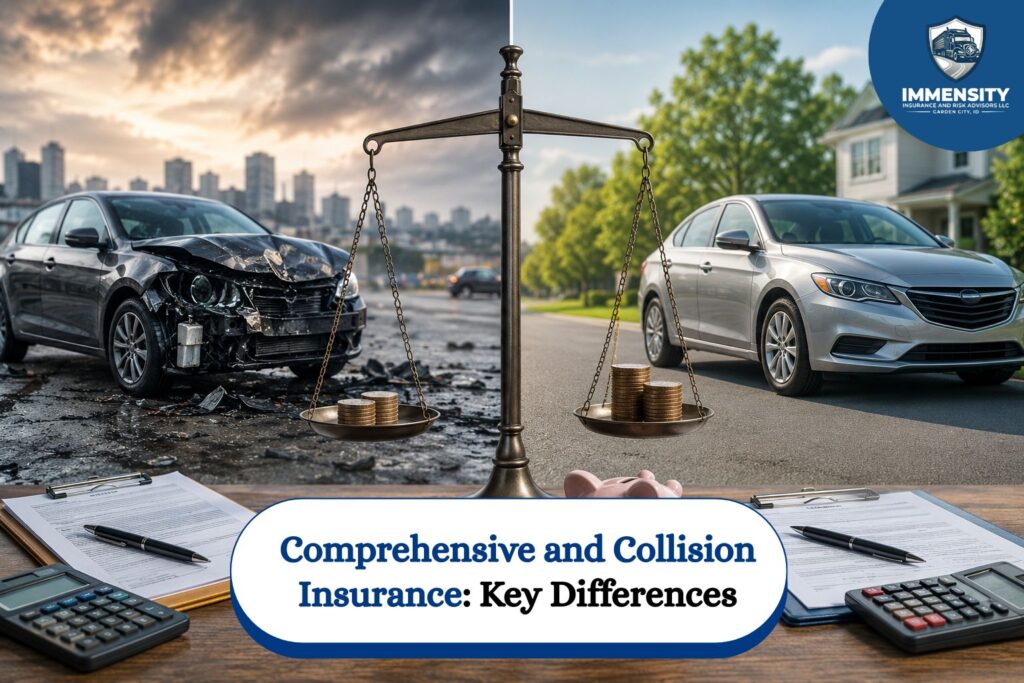
Comprehensive and collision insurance are optional coverages that protect Our vehicle from physical damage. However, they don’t cover the same types of incidents.
Collision insurance helps pay for repairs when Our vehicle is damaged in an accident. Comprehensive insurance, on the other hand, covers damage caused by events other than a collision.
Together, these coverages provide broader protection than liability insurance alone. As a result, many drivers choose both to reduce unexpected repair costs.
Here’s a simple breakdown:
- Collision insurance covers accidents involving another vehicle or object.
- Comprehensive insurance covers theft, fire, storms, vandalism, and similar events.
- Both usually include a deductible.
- Neither replaces liability insurance.
- Both help protect the value of Our vehicle.
Therefore, carrying both coverages often provides better financial security.
How Collision Insurance Works
Collision insurance helps pay for damage when Our vehicle is involved in an accident. Whether We hit another car, a guardrail, or a pole, this coverage can help with repair or replacement costs.
In most cases, the insurance company pays up to the vehicle’s actual cash value after subtracting the deductible. However, coverage limits and deductibles vary by policy.
For example, if We accidentally back into a concrete barrier, collision insurance can help cover the repair bill. Likewise, if another driver hits Our vehicle and fault is still being determined, collision coverage may still help pay for repairs.
When selecting a collision insurance company, it’s important to compare more than just price. We should also review claim support, customer service, repair networks, and policy options.
A dependable provider often offers:
- Quick claim processing
- Reliable repair assistance
- Flexible deductible choices
- Easy communication during claims
- Strong customer support
Because accidents happen without warning, having dependable collision coverage can reduce financial stress.
What Does Comprehensive Insurance Cover?
Comprehensive insurance protects Our vehicle from risks that don’t involve a traffic accident. Instead, it covers damage caused by unexpected events that are often beyond Our control.
For instance, severe weather, theft, and vandalism can all lead to expensive repairs. Fortunately, comprehensive coverage helps reduce those costs.
Common covered events include:
- Vehicle theft
- Fire damage
- Flooding
- Hail storms
- Falling trees or branches
- Wind damage
- Broken windshield
- Vandalism
- Animal collisions
Imagine parking Our vehicle outside overnight. During a storm, a large branch falls onto the roof. Since no collision occurred, comprehensive insurance would generally help pay for repairs after the deductible.
Similarly, if the vehicle is stolen, comprehensive coverage may help replace it based on its actual cash value.
Therefore, this coverage becomes especially valuable in areas with frequent storms or higher theft rates.
Comprehensive vs. Collision Insurance
Although these coverages are often purchased together, they serve different purposes.
Understanding those differences helps Us build the right insurance policy.
| Collision Insurance | Comprehensive Insurance |
|---|---|
| Covers accident damage | Covers non-collision damage |
| Protects after hitting another vehicle or object | Protects against theft, weather, fire, and vandalism |
| Helps repair crash-related damage | Helps repair unexpected losses |
| Usually required for financed vehicles | Often required with financed vehicles |
| Applies after a collision | Applies after covered non-collision events |
Because each coverage addresses different risks, many drivers choose both for more complete protection.
Why Both Coverages Matter
Some drivers wonder if carrying both policies is really necessary. The answer depends on several factors. However, for many people, having both offers stronger financial protection.
Vehicle repairs have become more expensive in recent years. In addition, replacement parts and labor costs continue to increase. As a result, even a minor accident or weather event can lead to a large repair bill.
Having both coverages helps reduce those unexpected expenses.
Consider carrying both if We:
- Own a newer vehicle
- Lease or finance a vehicle
- Drive long distances
- Park outdoors regularly
- Live in areas with severe weather
- Want better financial protection
On the other hand, older vehicles with low market value may not always need both coverages. Even so, the decision should depend on the vehicle’s condition and replacement cost.
Factors That Affect Insurance Costs
Every driver pays a different premium because insurance companies evaluate several risk factors.
Although rates vary, most providers review similar information before calculating a premium.
These factors usually include:
- Driver age
- Driving history
- Vehicle type
- Vehicle value
- Annual mileage
- ZIP code
- Deductible amount
- Previous insurance claims
For example, drivers with clean records often receive lower premiums. Likewise, vehicles with advanced safety features may qualify for discounts.
Choosing a higher deductible can also lower monthly payments. However, We must pay more out of pocket if a claim occurs.
Therefore, comparing Insurance quotes in US helps Us understand pricing differences before purchasing coverage.
Comprehensive Coverage for Commercial Vehicles
Commercial vehicles spend more time on the road than personal cars. Because of that, they often face greater risks.
Delivery trucks, cargo vehicles, and freight carriers experience more exposure to accidents, weather, and road hazards. As a result, selecting the right insurance becomes even more important.
A trusted commercial trucking insurance company understands these challenges and offers coverage designed for business operations.
Before purchasing a policy, We should compare a commercial truck insurance quote from multiple providers. Doing so helps Us evaluate coverage options, deductibles, and pricing.
In addition, businesses should review policies regularly as their fleets grow or operations change.
Proper coverage can help protect:
- Commercial trucks
- Business vehicles
- Equipment
- Daily operations
- Company finances
Because every business is different, insurance should be tailored to specific operational needs.
Protecting Owner Operators With the Right Coverage
Owner operators depend on their trucks to earn a living. Therefore, having the right insurance protection is a major part of running a successful trucking business.
Unlike regular drivers, owner operators face additional risks. They manage their own equipment, handle business responsibilities, and spend more time on the road. Because of this, their insurance needs are usually different from standard vehicle owners.
Understanding owner operator truck insurance cost helps drivers plan their business expenses better. Several factors can influence pricing, including:
- Type and value of the truck
- Driving history
- Cargo being transported
- Operating distance
- Experience level
- Coverage limits
- Claims history
Additionally, maintaining a safe driving record can help reduce long-term insurance expenses. On the other hand, frequent claims or violations may increase premiums.
We recommend reviewing coverage regularly because business needs can change over time. For example, adding new equipment, expanding routes, or increasing operations may require policy updates.
Understanding Trucking Insurance Costs
Many trucking businesses want to know how much they should expect to pay for coverage. However, there is no single price that works for every company.
The overall trucking insurance cost depends on several business and vehicle factors. A small trucking operation may have different needs compared to a large fleet.
Generally, insurance providers consider:
- Number of trucks
- Type of freight
- Driver experience
- Coverage requirements
- Vehicle condition
- Location of operation
- Safety practices
Moreover, businesses that invest in driver training and safety programs may improve their risk profile.
When comparing policies, We should focus on value instead of choosing only the lowest price. A cheaper policy may not always provide enough protection when a serious loss happens.
Therefore, reviewing coverage limits and exclusions is just as important as comparing premiums.
Choosing the Right Trucking Insurance Provider
Finding the right insurance partner can make a big difference for trucking businesses. A reliable trucking insurance company in US should understand the transportation industry and provide coverage options that match business needs.
The trucking industry has unique challenges. For example, truck accidents, cargo damage, and equipment losses can create major financial problems.
Because of this, trucking companies should look for coverage that may include:
- Primary liability protection
- Physical damage coverage
- Motor truck cargo insurance
- Trailer coverage
- General liability protection
- Bobtail insurance options
In addition, working with experienced insurance professionals can make the process easier. They can help explain coverage details and identify possible gaps.
Personal Auto Insurance Protection
Commercial vehicles are not the only vehicles that need protection. Personal vehicles also face daily risks from accidents, weather, and unexpected events.
A reliable personal auto insurance company in US can help drivers select coverage based on their lifestyle and budget.
Personal auto insurance options may include:
- Liability coverage
- Collision protection
- Comprehensive protection
- Uninsured motorist coverage
- Medical payment coverage
- Roadside assistance
For example, a driver who travels frequently may need different protection compared to someone who only drives short distances.
Similarly, a newer vehicle may benefit more from comprehensive and collision coverage than an older vehicle with lower market value.
Therefore, reviewing personal insurance needs every year can help ensure We have proper protection.
Getting Online Insurance Quotes Easily
Technology has made insurance shopping faster and more convenient. Today, drivers can compare options without spending hours visiting different offices.
It allows Us to review coverage options, compare prices, and understand available plans from the comfort of home.
When requesting an online quote, We should provide accurate details, including:
- Vehicle information
- Driving history
- Location
- Current coverage details
- Desired protection level
Additionally, comparing multiple options helps identify better value.
However, price should not be the only deciding factor. Coverage quality, customer service, and claim support are equally important.
Common Mistakes Drivers Make With Insurance
Choosing vehicle insurance can feel confusing. As a result, some drivers make decisions that may leave them underprotected.
Here are some common mistakes to avoid:
Choosing Only the Lowest Price
A low premium may seem attractive. However, it may come with limited coverage or higher out-of-pocket expenses.
Ignoring Deductibles
A lower monthly payment may include a higher deductible. Therefore, We should choose a deductible that fits Our financial situation.
Not Reviewing Coverage Regularly
Vehicle values and personal needs change over time. Because of this, reviewing policies annually is a smart habit.
Assuming All Damage Is Covered
Every policy has exclusions. Therefore, reading policy details helps avoid surprises during the claim process.
Tips To Save Money on Vehicle Insurance
Insurance costs can add up. Fortunately, there are several ways We may reduce expenses while keeping strong protection.
Consider these tips:
- Maintain a clean driving record.
- Compare multiple insurance options.
- Ask about available discounts.
- Increase deductibles carefully.
- Bundle eligible insurance policies.
- Improve vehicle security features.
- Review coverage limits regularly.
Additionally, keeping accurate vehicle information helps ensure We receive appropriate pricing.
Small changes can create long-term savings without sacrificing important protection.
Frequently Asked Questions
Is comprehensive insurance better than collision insurance?
Neither coverage is better because they protect against different risks. Comprehensive covers non-accident events, while collision covers accident-related damage.
Do I need both comprehensive and collision insurance?
It depends on the vehicle and personal situation. However, many drivers choose both for stronger protection, especially when they have newer or financed vehicles.
Does collision insurance cover weather damage?
No. Weather-related damage is usually covered under comprehensive insurance.
Can trucking companies get customized insurance plans?
Yes. Commercial trucking businesses can often choose coverage based on their vehicles, operations, and transportation needs.
How can I find affordable insurance options?
Comparing providers, reviewing coverage needs, and requesting multiple quotes can help find a suitable option.
Final Thoughts
Choosing the right vehicle protection starts with understanding coverage options and knowing the risks We face every day. Comprehensive and collision insurance can help protect vehicles from different types of damage, while the right policy structure ensures We are prepared for unexpected situations. We proudly serve customers from Idaho and provide coverage across Alabama (AL), Arizona (AZ), California (CA), Idaho (ID), Indiana (IN), Iowa (IA), Illinois (IL), New Jersey (NJ), Ohio (OH), Pennsylvania (PA), South Carolina (SC), Texas (TX), Virginia (VA), and Washington (WA). At Immensity Insurance, We focus on helping drivers and businesses find dependable coverage options that support their goals and provide confidence on every journey.