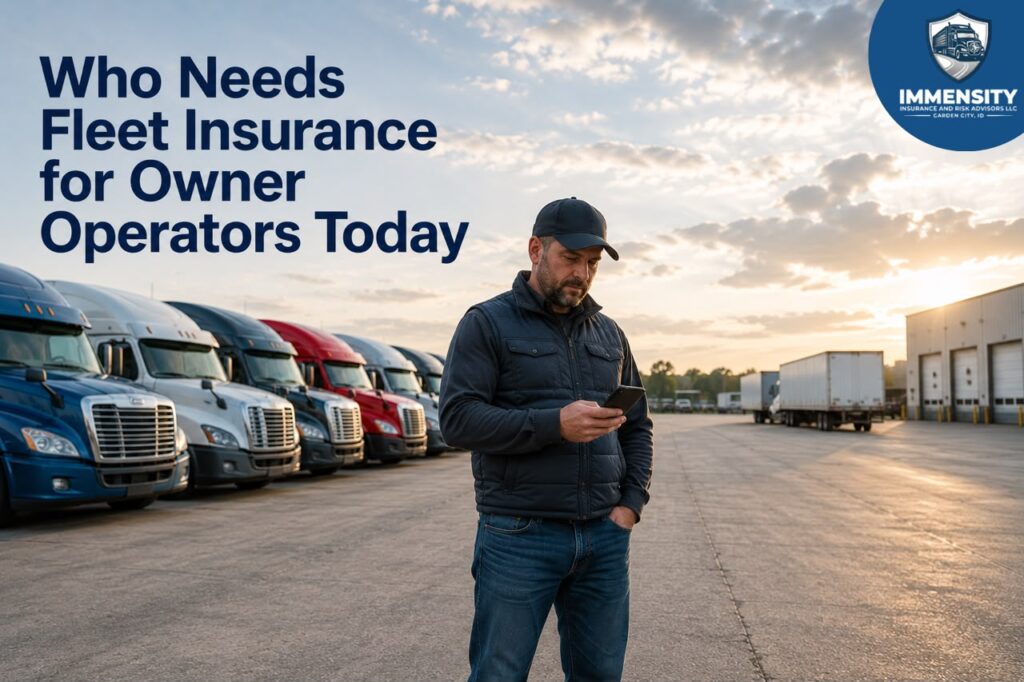
Running a trucking business comes with many responsibilities. We have to manage vehicles, drivers, freight, maintenance, and customer expectations. As our business grows, insurance needs often become more complex. That’s why Fleet Insurance for Owner Operators has become an important solution for many trucking professionals today.
Whether we operate a few trucks or plan to expand in the future, having the right coverage can help protect our business from unexpected situations. Moreover, managing multiple vehicles under one policy can make insurance administration much easier. Fleet Insurance for Owner Operators is designed to support growing trucking operations while providing protection for valuable assets.
In this guide, we’ll explore who needs this type of coverage, its benefits, and how it helps trucking businesses stay protected in today’s competitive transportation industry.
What Is Fleet Insurance for Owner Operators?
We specialized insurance solution that covers multiple commercial vehicles under a single policy. Instead of maintaining separate policies for each truck, we can manage coverage through one insurance program.
As a result, paperwork becomes easier to handle. Furthermore, policy management often becomes more organized as the business grows.
Many owner operators believe fleet insurance is only for large trucking companies. However, that’s not always the case. Depending on the insurance provider, smaller operations with multiple vehicles may also qualify for fleet coverage.
This type of insurance may include:
- Auto liability coverage
- Physical damage protection
- Cargo insurance
- Trailer coverage
- Driver-related protections
- Optional business coverage
Because every trucking operation is different, coverage can often be customized to fit specific business needs.
Who Needs Fleet Insurance for Owner Operators?
Not every trucking business requires fleet insurance immediately. However, many owner operators reach a stage where individual policies become difficult to manage.
You may benefit from Fleet Insurance for Owner Operators if:
- You operate more than one truck
- You employ additional drivers
- You plan to expand your fleet
- You manage multiple freight contracts
- You operate across several states
- You want easier policy administration
Additionally, businesses that are growing quickly often find that fleet coverage helps simplify their insurance management process.
Many trucking professionals also work with a commercial trucking insurance company in US markets to compare options and identify coverage that aligns with their goals.
Benefits of Fleet Insurance for Owner Operators
One of the biggest advantages of Insurance for Owner Operators is convenience. Instead of tracking multiple policies and renewal dates, we can manage coverage through a single insurance structure.
Other benefits may include:
- Simplified administration
- Consistent coverage across vehicles
- Easier policy updates
- Better organization for growing businesses
- More efficient record keeping
Moreover, fleet coverage allows us to focus more on running the business and less on managing paperwork.
As our operations expand, insurance requirements often become more complicated. Therefore, having a streamlined insurance solution becomes increasingly valuable.
How Fleet Insurance for Owner Operators Supports Business Growth
Growth is a goal for many trucking businesses. As new opportunities arise, additional trucks and drivers may be needed to meet demand.
Fleet Insurance for Owner Operators supports growth by making it easier to manage expanding operations.
For example, when new vehicles are added, adjustments can often be made under the existing policy structure. As a result, administrative processes become more efficient.
Furthermore, organized insurance management can help support:
- Long-term business planning
- Contract opportunities
- Driver expansion
- Operational efficiency
- Risk management
Because trucking is a competitive industry, preparation is important. Having the right insurance structure in place can help us pursue growth with confidence.
Fleet Insurance for Owner Operators and Auto Liability Protection
Liability coverage remains one of the most important parts of any trucking insurance program.
Auto liability insurance in US markets is designed to help protect businesses when covered accidents result in injuries or property damage.
Liability coverage may help with:
- Third-party injury claims
- Property damage expenses
- Legal defense costs
- Settlement expenses
Moreover, many contracts require proof of liability coverage before work can begin.
As businesses expand, liability exposure often increases. Therefore, reviewing coverage regularly is an important part of risk management.
Fleet Insurance for Owner Operators and Cargo Coverage
Freight is at the center of every trucking operation. Customers trust us to transport valuable goods safely and efficiently.
That’s why understanding motor truck cargo insurance cost is important when evaluating insurance options.
Cargo coverage may help protect:
- Freight in transit
- Customer shipments
- Certain theft-related losses
- Covered cargo damage
Additionally, many shippers prefer working with carriers that maintain appropriate cargo coverage.
Because customer relationships are essential in transportation, protecting freight remains a key priority.
Understanding Trailer Coverage for Fleet Operations
Many owner operators use trailers they do not own. In these situations, trailer protection becomes important.
Learning about trailer interchange insurance cost can help us understand the value of protecting borrowed or leased trailers.
Trailer interchange coverage may help with:
- Leased trailer protection
- Borrowed trailer protection
- Customer-owned trailer coverage
- Equipment-related risks
As a result, trucking businesses can operate more confidently when using equipment owned by others.
Furthermore, trailer coverage helps support smoother day-to-day operations.
Why Physical Damage Coverage Matters
Our trucks are valuable business assets. Therefore, protecting them is essential.
Many operators search for the best collision insurance company when evaluating physical damage coverage options.
Physical damage protection may help with:
- Collision-related repairs
- Vehicle replacement considerations
- Covered equipment damage
- Unexpected repair expenses
Moreover, vehicle downtime can affect revenue and customer service. That’s why protecting equipment is an important part of a comprehensive insurance strategy.
The Role of Bobtail Coverage in Fleet Protection
There are times when trucks operate without trailers attached. These situations create unique insurance needs.
Understanding bobtail truck insurance cost helps owner operators evaluate protection during non-dispatch driving situations.
Bobtail coverage may be useful when:
- Driving without a trailer
- Returning after deliveries
- Traveling between assignments
- Operating outside specific dispatch activities
Additionally, growing fleets often experience a wider variety of operational scenarios. Therefore, reviewing bobtail protection is a smart risk management step.
Business Protection Beyond Vehicle Insurance
Insurance needs often extend beyond trucks and cargo.
Many trucking businesses also evaluate general liability insurance cost when creating a comprehensive protection strategy.
General liability coverage may help with:
- Customer injury claims
- Property damage claims
- Certain legal expenses
- Business-related liability situations
Furthermore, some customers and contracts may require this type of coverage before agreements are finalized.
As a result, general liability protection can become an important part of long-term business planning.
When Should You Buy Fleet Insurance for Owner Operators?
The best time to consider Insurance for Owner Operators is when business growth creates additional insurance management challenges.
Common signs include:
- Multiple insured trucks
- Additional hired drivers
- Expanding freight operations
- Growing service areas
- Increased administrative work
Moreover, planning ahead often makes future expansion easier.
Rather than waiting until insurance management becomes difficult, many businesses explore fleet coverage before major growth occurs.
Choosing the Right Fleet Insurance for Owner Operators
Selecting the right coverage requires careful evaluation.
Before making a decision, consider:
- Coverage flexibility
- Industry experience
- Claims support
- Customer service
- Transportation expertise
- Growth accommodations
Some operators begin by requesting an comparison to understand available options. However, trucking businesses typically require specialized insurance solutions that address commercial transportation risks.
Therefore, working with experienced insurance professionals can help ensure coverage aligns with operational needs.
Conclusion
Today’s trucking industry continues to create opportunities for growth. However, growth also brings additional responsibilities. That’s why Insurance for Owner Operators remains an important consideration for businesses that want to protect their vehicles, cargo, drivers, and long-term operations.
Whether we’re reviewing auto liability insurance in US requirements, evaluating motor truck cargo insurance cost, understanding trailer interchange insurance cost, comparing the best collision insurance company, assessing bobtail truck insurance cost, or researching general liability insurance cost, the right insurance strategy can make a significant difference.
At Immensity Insurance, we help owner operators find coverage solutions that support business growth while protecting what matters most.
Frequently Asked Questions
1. What is Fleet Insurance for Owner Operators?
Fleet Insurance for Owner Operators is a type of commercial insurance that covers multiple trucks under a single policy. It helps simplify insurance management while providing protection for vehicles, drivers, and business operations.
2. Who needs Fleet Insurance for Owner Operators?
Owner operators who manage multiple trucks, hire drivers, or plan to expand their transportation business may benefit from Insurance for Owner Operators. It is especially useful for growing trucking companies that want easier policy administration.
3. How does Fleet Insurance for Owner Operators work?
Fleet Insurance for Owner Operators combines coverage for multiple commercial vehicles into one policy. As a result, businesses can manage renewals, coverage updates, and insurance documents more efficiently.
4. Can small trucking businesses get Fleet Insurance for Owner Operators?
Yes. Many insurance providers offer Fleet Insurance to small and medium-sized trucking businesses. Eligibility requirements may vary depending on the insurance company and fleet size.
5. Does Fleet Insurance for Owner Operators include cargo coverage?
Fleet insurance may include cargo coverage options. However, coverage depends on the policy selected. Many trucking businesses also add cargo protection to help safeguard customer shipments during transit.
6. Is auto liability insurance included in fleet coverage?
Most fleet insurance programs include auto liability insurance. This coverage helps protect businesses if a covered accident causes injury or property damage to another party.
7. What factors affect Fleet Insurance for Owner Operators?
Several factors can influence coverage requirements, including the number of trucks, driver experience, operating radius, cargo type, business history, and selected coverage options.
When should I upgrade to Fleet Insurance for Owner Operators?
You should consider Fleet Insurance for Owner Operators when managing multiple trucks becomes difficult with separate policies. Additionally, businesses planning future growth often benefit from switching to fleet coverage before expansion occurs.