Introduction
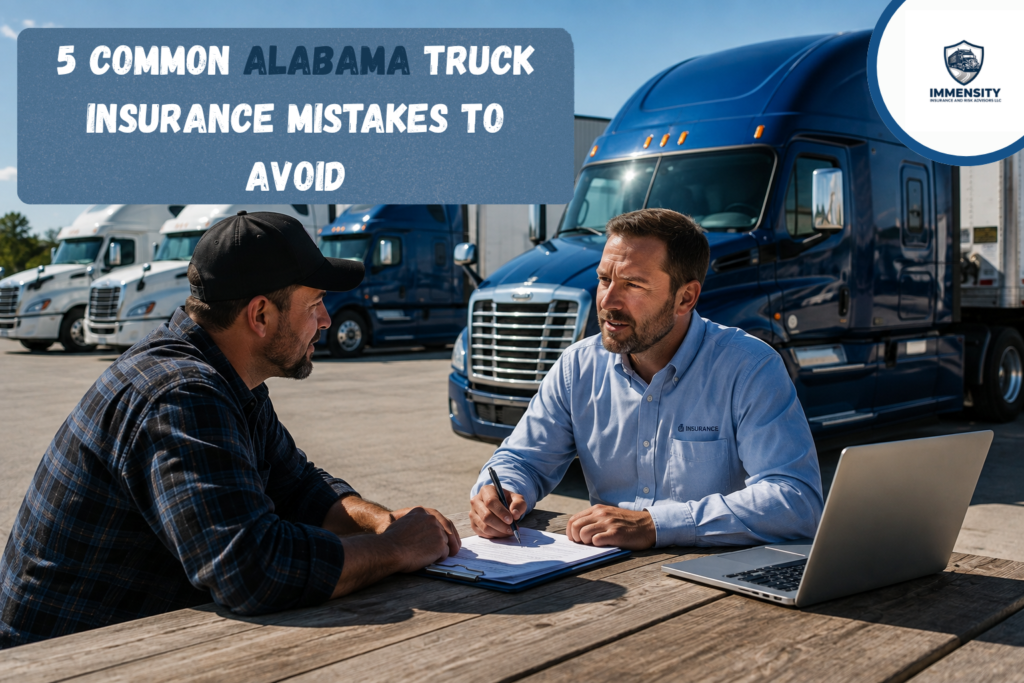
Alabama Truck Insurance plays an important role in protecting your trucking business from costly risks. Whether you operate one truck or manage a growing fleet, the right coverage can help protect your vehicles, cargo, drivers, and business assets. However, choosing coverage based only on price can create serious gaps later. Also, every trucking operation has different needs. Your cargo, routes, vehicles, drivers, and contracts can all affect your policy. Therefore, it is important to understand what you are buying before you start hauling. In this guide, we’ll cover five common mistakes and explain how you can avoid them.
Why Alabama Truck Insurance Matters
Trucking involves risks that ordinary personal vehicles do not face. A commercial truck may travel hundreds of miles each week. It may also carry valuable freight and operate in busy traffic.
An accident can result in medical bills, property damage, cargo losses, and legal expenses. Therefore, the right insurance can provide an important layer of financial protection.
Alabama truck insurance can include several types of coverage. However, your exact needs depend on how your trucking business operates.
For example, an owner-operator hauling general freight may need a different policy from a fleet transporting specialized equipment. In addition, a trucker operating under a carrier may have different requirements from someone operating under their own authority.
That is why you should review your business before selecting coverage.
Mistake #1: Choosing Insurance Based Only on Price
One of the most common mistakes is selecting the cheapest insurance quote without reviewing the coverage.
A low premium may look attractive. However, it may come with lower limits, higher deductibles, or fewer coverage options.
Saving money today can create a much larger expense after an accident.
When comparing Alabama Truck Insurance, look beyond the monthly or annual premium. Review the limits, deductibles, exclusions, and coverage types.
Ask questions such as:
- What does the policy actually cover?
- What are the liability limits?
- Is physical damage coverage included?
- Does the policy cover the type of cargo I haul?
- What deductible will I pay after a covered loss?
- Are there important exclusions?
Also, compare policies on an equal basis. One quote may look cheaper because it provides less protection.
Therefore, the best policy is not always the least expensive one. Instead, look for coverage that balances protection, business needs, and cost.
Mistake #2: Ignoring Liability Coverage Requirements
Liability coverage is a major part of commercial trucking insurance. It can help protect you when your truck causes covered bodily injury or property damage to another party.
However, some truck owners make the mistake of choosing limits without considering their actual operation.
Commercial auto liability insurance can be especially important for trucking businesses. The appropriate limits can depend on factors such as your authority, cargo, contracts, and operating activities.
You may also need to meet specific requirements before starting operations.
Therefore, don’t assume that a basic liability policy will meet every requirement. Check your business obligations and make sure your coverage aligns with them.
In addition, review your limits when your business grows.
For instance, adding more trucks or taking on new contracts may change your exposure. A policy that worked for a small operation may not provide the same level of protection as your business expands.
Mistake #3: Overlooking Cargo Coverage
Your truck may be valuable, but the freight inside it can also represent significant financial value.
This is where motor truck cargo insurance can become important. Cargo coverage can help protect covered freight while it is being transported.
However, truck owners sometimes assume that their liability policy automatically covers their cargo. That assumption can create a serious coverage gap.
Cargo policies can have different limits, exclusions, and conditions. Therefore, you should understand what type of freight you transport before selecting coverage.
For example, refrigerated goods, electronics, machinery, and other specialized cargo may have different risks.
The motor truck cargo insurance cost can also vary based on several factors. These may include the type of cargo, limits, routes, claims history, and business operations.
Instead of focusing only on price, consider the value of the freight you regularly carry.
Also, check whether your customers or contracts require a specific cargo limit.
What to Check Before Buying Cargo Coverage
Before selecting cargo protection, consider:
- The average value of your loads
- The highest-value load you may transport
- Types of freight you haul
- Your normal operating radius
- Cargo-related exclusions
- Deductible amounts
- Contractual insurance requirements
This simple review can help reduce unexpected coverage problems.
Mistake #4: Forgetting Physical Damage Coverage
A commercial truck is a major investment. If it is damaged in an accident, repairing or replacing it can be expensive.
Yet some operators focus heavily on liability and overlook their own vehicle.
Physical damage coverage can help protect your truck against covered losses. Depending on the policy, it may include protection for events such as collisions, theft, fire, vandalism, or other covered causes.
However, coverage details vary by policy.
If your truck is financed or leased, your lender may also require certain physical damage protection.
Therefore, check your financing or lease agreement before making a decision.
The value of your truck matters too. A newer or more expensive vehicle may require careful consideration of coverage limits and deductibles.
Also, think about how quickly your business could recover if your truck became unavailable.
A truck that sits in a repair shop cannot generate revenue in the same way. Therefore, protecting your vehicle can also help protect your ability to keep operating.
Mistake #5: Not Understanding Bobtail and Trailer Coverage
Truckers sometimes confuse different types of coverage. This can lead to unexpected gaps.
For example, bobtail insurance cost may vary depending on your operation, driving history, and policy details. Bobtail coverage generally addresses certain situations when a truck is being operated without a trailer.
However, bobtail coverage is not the same as every other form of trucking liability protection.
Similarly, trailer interchange insurance serves a specific purpose. It can help protect certain trailers that you use under a trailer interchange agreement.
If you regularly pull trailers that you do not own, ask whether trailer interchange coverage applies to your operation.
Also, understand when the coverage begins and ends.
A good insurance review should consider how your truck operates during:
- Loaded trips
- Unloaded trips
- Deadhead travel
- Bobtail situations
- Trailer interchange operations
- Yard movements
- Personal use, when applicable
Therefore, explain your normal operations clearly when requesting a quote.
Don’t Overlook Trucking General Liability Insurance
Truckers often focus on their vehicles and forget about other business activities.
trucking general liability insurance can help address certain third-party claims related to business activities outside the core operation of driving a truck.
For example, a trucking company may interact with customers, warehouses, loading areas, or other businesses.
However, general liability does not replace commercial auto coverage. Each policy serves a different purpose.
Therefore, consider your entire operation rather than focusing on one risk.
A complete insurance review should look at the truck, cargo, drivers, business activities, and contractual obligations.
How to Choose Better Alabama Truck Insurance
Avoiding these mistakes starts with asking the right questions.
Before purchasing Alabama Truck Insurance, prepare basic information about your business. This can make the quote process easier and help you compare policies more accurately.
Have details such as:
- Truck make, model, and value
- Driver information
- Driving history
- Business experience
- Cargo types
- Operating radius
- Estimated annual mileage
- Current insurance information
- Loss and claims history
- Lease or carrier requirements
Also, explain how you actually use your truck.
For example, don’t describe your operation as local if you regularly travel across state lines. Accurate information helps the insurer evaluate your risk more effectively.
In addition, ask about exclusions before purchasing coverage.
A policy can look comprehensive at first glance. However, exclusions may limit protection in certain situations.
When Should You Review Your Coverage?
Your insurance should not be something you review only once.
Business conditions can change throughout the year. Therefore, review your Alabama Truck Insurance whenever there is a major change in your operation.
Consider reviewing your policy when you:
- Buy another truck
- Sell a truck
- Hire a new driver
- Change drivers
- Start hauling new cargo
- Expand your operating radius
- Sign a new carrier agreement
- Increase your fleet size
- Change your business structure
Also, review your policy before renewing it.
A renewal is a good opportunity to compare your current coverage with your current business needs.
What About Commercial Truck Insurance Alabama Requirements?
Searching for commercial truck insurance Alabama coverage often means you need to understand more than just the premium.
Your insurance requirements can depend on how and where you operate. Federal requirements may apply to certain interstate trucking operations. Contractual requirements can also affect the limits and coverage your business needs.
Therefore, don’t assume that another trucker’s policy will work for you.
Your operation may have different vehicles, cargo, routes, and contracts.
The safest approach is to review your individual situation and confirm the requirements that apply to your business.
Other Insurance Needs Truck Owners May Have
Truck owners sometimes operate more than one type of vehicle or business activity.
For example, you may also own personal vehicles or motorcycles. In that case, you may need separate personal coverage.
Motorcycle insurance in US policies, for example, are designed for motorcycles rather than commercial trucks. Personal auto policies also differ from commercial trucking policies.
Therefore, avoid combining different insurance needs without checking whether the policy actually applies.
Likewise, if you use a vehicle for business purposes, tell your insurance provider. The way you use a vehicle can affect the type of coverage you need.
Frequently Asked Questions
1. What is Alabama Truck Insurance?
Alabama Truck Insurance refers to commercial insurance coverage designed for trucking operations in Alabama. Coverage can include liability, physical damage, cargo, and other options based on the business.
2. How much does truck insurance cost in Alabama?
There is no single price for every trucking business. Your premium can depend on the truck, drivers, cargo, operating radius, claims history, coverage limits, and other factors.
3. Do owner-operators need commercial truck insurance?
Yes, owner-operators generally need commercial coverage for their trucking operations. The exact coverage depends on whether they operate under their own authority or lease to a carrier.
4. Is cargo insurance different from liability insurance?
Yes. Liability coverage generally addresses certain third-party injury and property damage claims. Cargo coverage can protect covered freight being transported.
5. Why should I review my truck insurance every year?
Your business can change over time. You may add trucks, hire drivers, change cargo, or expand your routes. Therefore, an annual review can help make sure your coverage still fits your operation.
Keep Your Coverage Aligned With Your Business
The five mistakes discussed above are easy to overlook. However, each one can create unnecessary financial risk for a trucking business.
Choosing coverage based only on price may leave gaps. Ignoring liability requirements can create compliance problems. Likewise, overlooking cargo, physical damage, bobtail, or trailer coverage can leave important assets exposed.
Therefore, take time to understand your policy before you buy it. Also, review your coverage whenever your trucking operation changes.
Whether you need liability protection, cargo coverage, physical damage protection, or other commercial options, the goal is simple: choose coverage that fits the way your business actually operates.
If you are comparing Alabama Truck Insurance options, Immensity Insurance can help you review your coverage needs and explore suitable insurance solutions for your trucking business.